From the high-octane action of Gotham City to the labyrinthine mysteries of the subconscious, Christopher Nolan has dazzled audiences for over two decades since his first mainstream hit, Memento, since then Nolan has become the golden child of a generation of film lovers who has somehow managed to balance box office prestige with critical acclaim, despite the tumultuous Hollywood landscape.
Nolan is an audacious, cerebral filmmaker whose best movies are awe-inspiring, frantic spectacles. Every great journey needs a beginning, so let’s delve into his films and help new audiences understand which films are ‘best’ and which are ‘worst’, although in Nolan’s case, even his ‘worst’ is better than most.
The Dark Knight
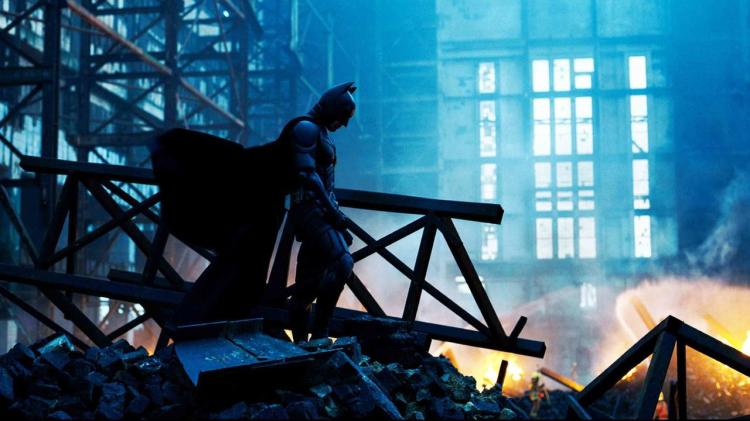
We’re still in the middle of a superhero bubble – even if it is beginning to look like the bubble has burst – It’s hard to understand what The Dark Knight felt like in a pre-Superhero era; yes, there were plenty of superhero films before The Dark Knight, including the first Marvel films and Tim Burton’s Batman works. However, no superhero had ventured into such a gritty direction; this wasn’t just a story of superhuman strength but a complex study of society and morality.
The middle chapter of Nolan’s Batman trilogy, released in 2008, is a thrilling dark portrait of Batman’s existential crisis and Gotham’s descent into chaos. The plot revolves around the anarchic Joker, masterfully played by Heath Ledger, whose chaotic plans are a catalyst for Bruce Wayne’s moral struggle.
If you’ve been even vaguely aware of pop culture, you’ll know The Dark Knight is a big deal. It won Oscars, Hans Zimmer’s haunting score has become iconic, and the film routinely fights The Godfather and Shawshank Redemption for the top of the IMDB top film list.
Inception
Two years after The Dark Knight, Nolan proved that his commercial potential was only being unleashed with Inception, one of the most starkly original films to net a significant box-office profit in the 2010s. Released in 2010, it is a mind-bending heist thriller set in a surreal, layered world of dreams. Never before had such a high-concept film performed as well.
In Inception, Dom Cobb (Leonardo DiCaprio) leads a team of thieves who steal information by infiltrating the subconscious, yet Cobb’s past threatens to unravel their most challenging mission yet. The film’s intricate plot weaves multiple levels of dream realities pushing the limits of narrative storytelling. It’s an incredible film, boosted by top-notch performances, groundbreaking visual effects and another great Zimmer score.
Memento
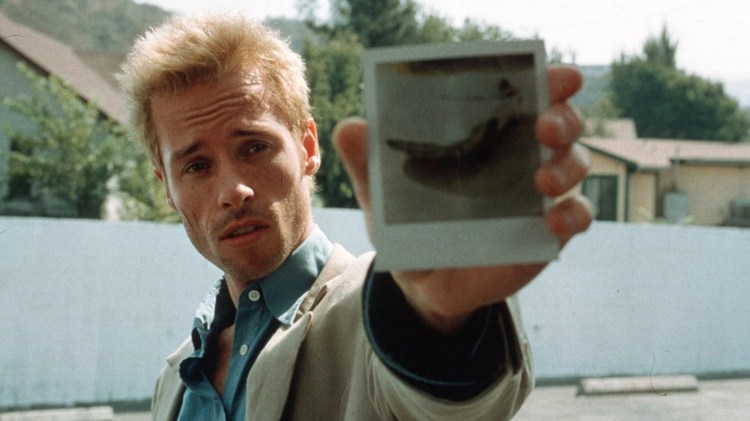
All the way back in the year 2000, Nolan released Memento, his second feature-length film, which firmly established him as a director to watch out for. It’s a psychological thriller which plays with time and memory, spinning a narrative web which keeps audiences puzzled and guessing throughout the runtime as they watch Guy Pearce’s Leonard, a man with a unique form of amnesia, on a revenge quest against his wife’s killer.
The film, like many of Nolan’s best, played with a non-linear format, this one mirroring Leonard’s memory condition. The story unfolds in reverse, intercut with chronological black-and-white scenes, creating an unconventional watch which challenges viewers and makes them an active participant in piecing together its narrative. It’s an ingenious film which belays its mediocre budget ($9m), proving that Nolan had the potential to be an all-time great.
Dunkirk
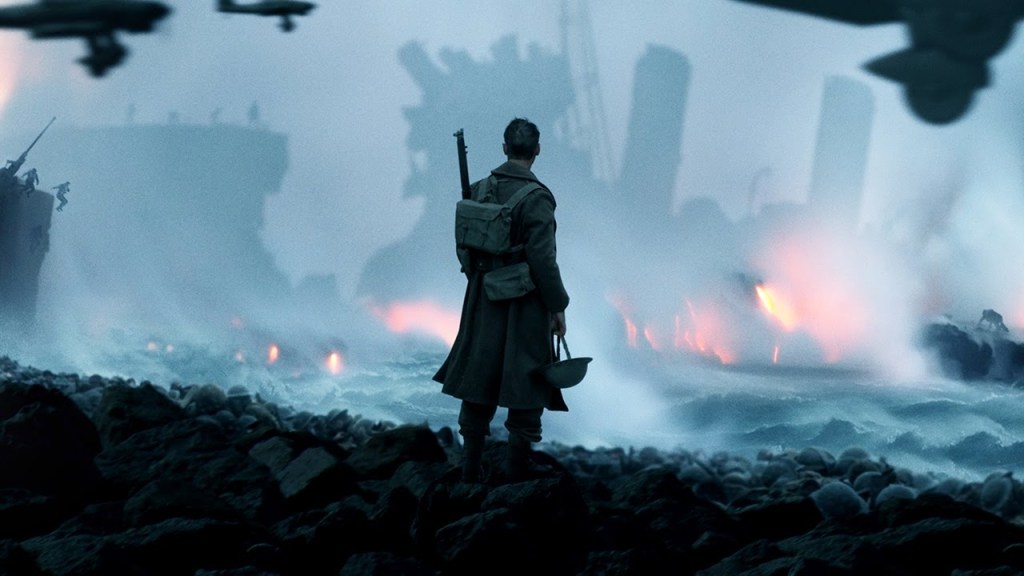
Released in 2017, Dunkirk was a stark departure from Nolan’s signature high-concept films. Instead, this WW2 flick showcased Nolan’s adeptness at creating visceral cinematic, immersive experiences. Based on the evacuations of British troops from Dunkirk in 1940, the film presents a gripping, experiential spectacle that plunges viewers into the thick of it.
Dunkirk unravels in a triptych narrative structure, simultaneously depicting events on land, sea and air. Each storyline operates within its own timeline, converging in a climax underscoring the chaotic desperation of war. With minimal dialogue, Nolan relies on another intense Zimmer score and rich visuals to create an almost claustrophobic viewing experience.

The Dark Knight Rises
The finale of Nolan’s Batman trilogy is an ambitious, sprawling epic with as many detractors as supporters; I count myself as a supporter. The film, released in 2012, brings Nolan’s gritty series to a satisfying conclusion as we watch Batman struggle against Bane, saving Gotham once more. The story delves deep into Bruce Wayne’s psyche and is an emotional journey examining the notions of sacrifice, redemption and legacy.
While those who adore the film celebrate its scale, performances and depth, those who dislike it generally comment on its pacing issues and narrative cohesion caused by its ambitious scope. Similarly, the film isn’t anchored by a performance as hypnotising as Heath Ledger’s Joker in The Dark Knight.
Interstellar
Between Dunkirk and The Dark Knight Rises, Nolan embarked upon arguably his most ambitious project, 2014’s Interstellar. This sci-fi epic delves into astrophysics and quantum mechanics but, at its heart, offers a deeply human story. The plot follows a group of astronauts, led by Matthew McConaughey’s character, on a quest to find a new home for humanity as Earth nears its end.
Interstellar’s combination of emotional core and high-concept narrative unravels beautifully, exploring complex theories and time and space. The film’s visual sublime, but the narrative does at points wander into being overly sentimental, a marked contrast to Nolan films’ usual restrained emotions.

The Prestige
The Prestige is a captivating tale of obsession and deception in Victorian-era London. Released in 2006, this period drama mystery tells the story of rival magicians, played by Christian Bale and Hugh HJackman, whose competitive obsession leads them down a dark, destructive path.
The film features a signature Nolan intricate plot and narrative structure, which alternates between different time frames and perspectives, enhancing its mystery and keeping the audience guessing. The final twist is controversial, but generally, The Prestige is a well-crafted work which explores themes of illusion and reality, ideas Nolan has since revisited, making The Prestige a key film in understanding his cinematic evolution.
Batman Begins
Although Nolan is now one of the most recognisable names in cinema due to his box-office success, he was once just a hip indie director who was pushing boundaries. That all began to change with Batman Begins, his first venture into blockbuster filmmaking. Released in 2005, the first part of his Batman trilogy focuses on Bruce Wayne’s transformation into Batman and his fight against Gotham’s corruption.
The film proved Nolan’s ability to handle big-budget films without compromising narrative complexity or thematic depth. It redefined the Batman character away from the campy interactions of the past, offering a more realistic, psychologically nuanced interpretation. In general, Batman Begins is overshadowed by The Dark Knight. However, it’s still a good film, and an important moment in Nolan’s career, marking his transition from indie darling to mainstream auteur.

Insomnia
Nolan’s third feature film, Insomnia, released in 2002, is a remake of a Norweigan film. It’s a crime thriller which follows a veteran detective, played by Al Pacino, investigating a murder in a small Alaskan town while struggling with guilt, manipulation and the perpetual daylight of the Alaskan summer.
Despite being a remark, Nolan’s signature touch is apparent, subtly exploring themes of guilt, morality and identity. Yet, it lacks the narrative complexity of his other work, unveiling a straightforward narrative. It’s a solid film in its own right, with its atmospheric setting and Pacino’s performance, but it is overshadowed by the rest of his filmography. Yet it still marked a major moment when Nolan first collaborated with a major studio and directed an A-list cast.
Following
Nolan’s debut feature is a low-budget black-and-white thriller which explores his signature themes of obsession, identity and manipulation. The film, released in 1998, follows a young writer who follows strangers around London, leading him into a world of crime and deceit. Despite its modest budget and unknown cast, the film showcases much of what would come to be characteristic of Nolan’s style: a non-linear narrative, thematic depth, and clever plot twist.
However, it’s a relatively obscure film and is hard to find. It’s not a particularly brilliant film, but ultimately its greatest value is its foreshadowing of Nolan’s career to come. It is an intriguing introduction to Nolan’s unique cinematic voice.

Tenet
Tenet, released in 2020, is an ambitious sci-fi action thriller that revolves around a protagonist, played by John David Washington, tasked with preventing World War III, not through time travel, but time ‘inversion.’ Tenet epitomises Nolan’s penchant for high-concept narratives and stunning set pieces, yet it also typifies common criticisms of his work – namely, a convoluted plot and emotionally distant characters.
Despite the anticipation preceding it and its star-studded cast, the film wasn’t particularly good. It has its fans, but generally, it was the hardest to follow and the least well-thought-out narrative Nolan made and lacked an emotional core for the audience to hold onto. Additionally, the film’s sound mixing made its dialogue hard to hear.
The Best Christopher Nolan Films
From the humble beginnings of Following to the mind-blending complexity of Tenet, Christopher Nolan has consistently shown a desire to create high-concept films that push the boundaries of cinema as few big-budget directors do. He has created a legion of fans for his visually stunning films, which challenge our perceptions of time, memory and identity while achieving significant commercial success.
Although Tenet was a let-down, Nolan has had an incredibly high-quality filmography, with just the one blip on his radar solidifying him as not just one of the most influential directors of his generation but of all time.
Whether it’s through a gritty superhero narrative, a spellbinding space odyssey, or a mind-twisting sci-fi thriller, Nolan’s films consistently invite us to see the world from a new perspective.
With Oppenheimer due to come out, it’ll be interesting to see where it lands on this list. It doesn’t sound like it’ll share the over-complexity of Tenet, but does it share the brilliant performances and visuals of The Dark Knight? I don’t know, but I’m looking forward to finding out.
 Bronze Screen Dream