
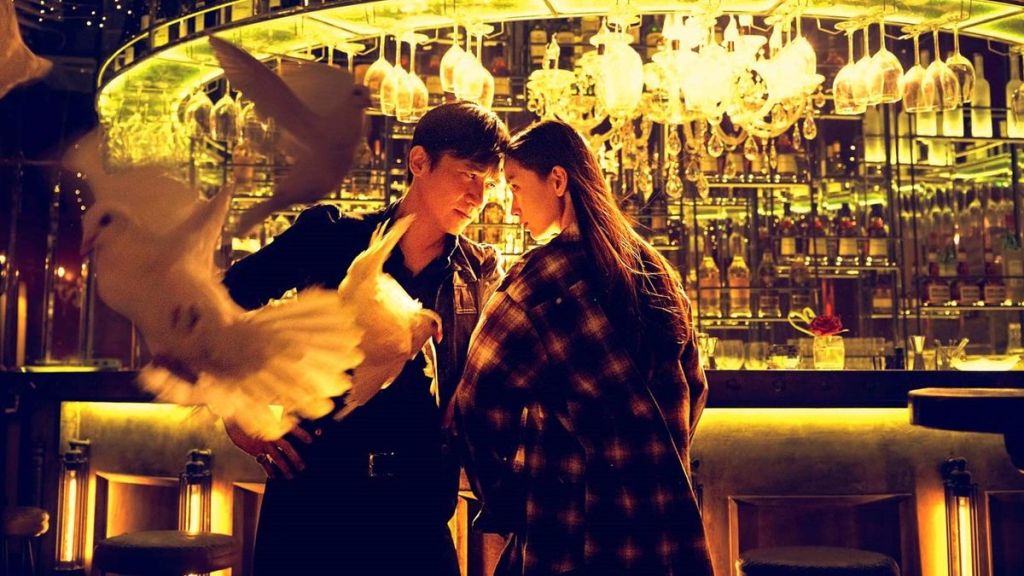
Once hailed as one of the greatest directors of our time, Wong Kar-wai‘s near decade-long absence from the director’s chair has stirred an intriguing controversy around the 2016 film ‘See You Tomorrow’.
Wong Kar-wai, a stalwart of Hong Kong cinema, is renowned for his unique storytelling approach, characterised by a poignant blend of style and substance. His filmography is a vivid palette of emotive pieces with distinctive visual aesthetics, drawing on themes of love, time, and memory. His directorial debut with “As Tears Go By” (1988) marked the start of a flourishing career that would later produce critically acclaimed masterpieces like “Chungking Express” (1994), “In the Mood for Love” (2000), and “2046” (2004). The auteur’s poignant narratives and his use of recurring motifs and music helped establish him as one of the all-time greats.
Wong Kar-wai released his last film in 2013 – The Grandmaster. Since then, he’s been relatively dormant; that’s nearly a decade of inactivity from one of the greatest directors of all time. However, he hasn’t been entirely motionless; he’s been producing some films and dipping his toe into his back catalogue.
Amid all these projects is See You Tomorrow, a film released in 2016 to an almost impressive lack of fanfare. The film was directed by Zhang Jiajia, a relative unknown, produced by Jacky Pang, Wong’s long-time producer since Ashes of Time, and written by Zhang and Wong.
See You Tomorrow went unnoticed in the Western world, and when it has been talked about, it’s always been more about the rumours that the film was ghost-directed by Wong Kar-wai. While these accusations are more-than-a-little unfair to Zhang Jiajia, they’re not without merit.
The Film
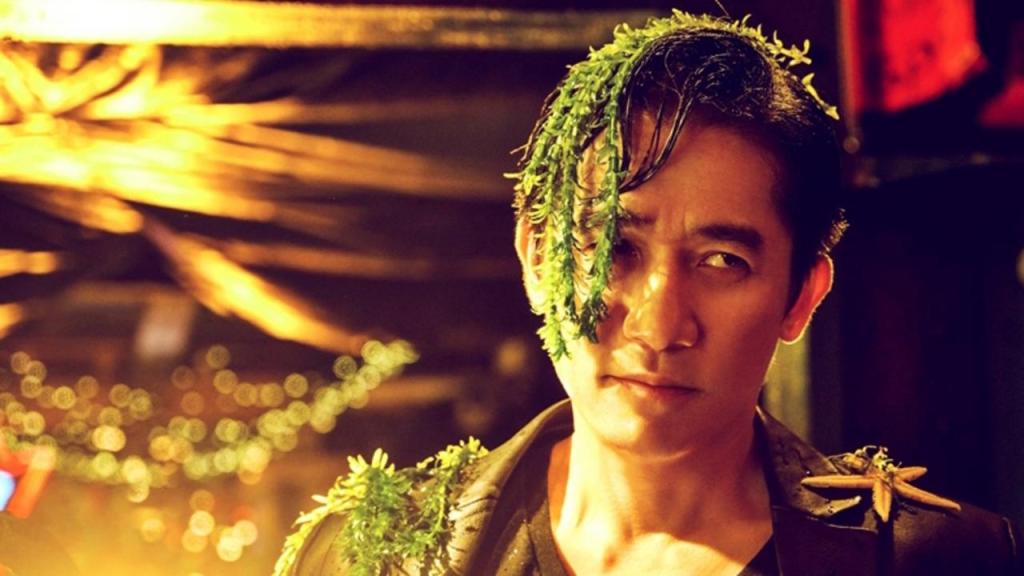
The film is lyrically and emotionally reminiscent of Wong’s early films, and the presence of Tony Leung Chiu-Wai and Takeshi Kaneshiro, both recurring actors in Wong’s movies, instantly makes one recall Wong’s style. It’s a relatively fun-to-watch, shallow film with crazy characters and splashy visuals; while Tony Leung is surprisingly weak here, Takeshi Kaneshiro more than makes up for it with his extreme character.
Unfortunately, that’s kind of where the positivity ends. The film lacks Wong’s usual finesse and plays more like a drunk version of one of his classic films, set in Shanghai, his birthplace, rather than Hong Kong, his home. It’s a bizarre yet gorgeous bore.
Plot Summary
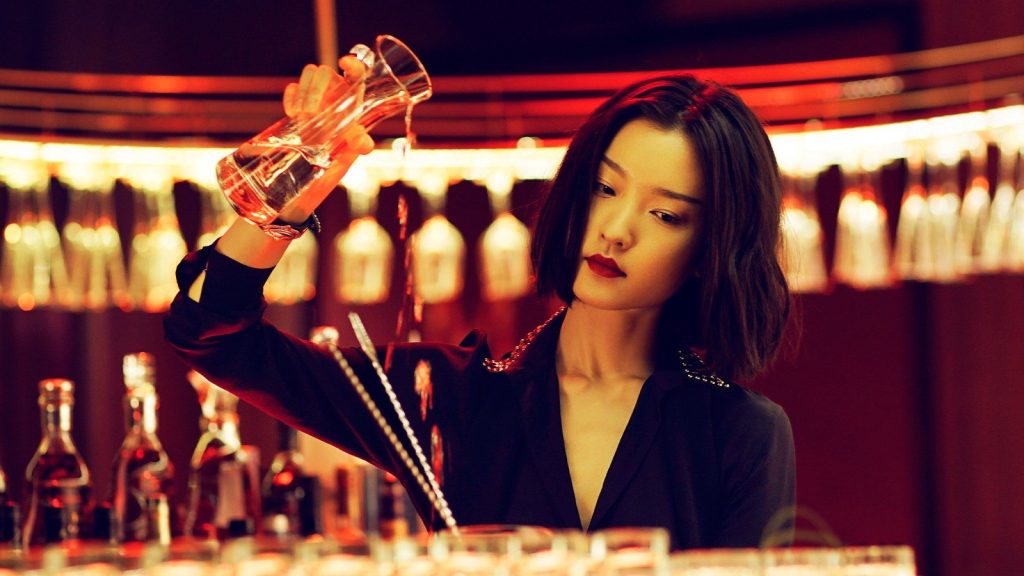
But what’s the film about? Well, essentially, it’s about Chen Mo (Tony Leung Chiu-Wai) and Guan Chung (Takeshi Kaneshiro), who run a bar called See You Tomorrow in Shanghai. Chen Mo acts as a ‘ferryman’, helping people through their emotional struggles. The story revolves around Wong Kar-wai’s pet motif of unrequited love as it explores the characters’ love lives, including Guan Chung’s past love Mao Mao, Xiao Yu’s crush on rocker Ma Lik, and Chen Mo’s past relationship with bartender He Muzi.
In true-Wong Kar-Wai style, the narrative switches abruptly between different storylines and includes classic Tony Leung voiceover narration. However, the story lacks any real substance, and its sense of humour is mostly slapstick and culture-specific, which means this Western watcher missed out.
Negatives
The film has glaring plot holes, cheap gimmicks and lacks any real resolution. The film does imitate Wong Kar-wai’s visual and storytelling style well, with classically opulent productions and a glossy look, but with exaggerated and zany elements which don’t work within this style. Another Wong trademark featured here is the inclusion of well-known songs, contributing to the film’s pop-art sensibilities.
Its attempt at mimicking Wong’s style is ultimately in vain. It never captures the depth of soul we see in Chungking Express, Happy Together or In The Mood For Love; its Wong Kar-wai references come across as somewhat pandering and alienating.
However, for the ultimate super-fan, it might be worth a watch; it’s a self-referential film where Wong reveals a side of himself we didn’t know too much about; it’s much more goofy, playful and self-aware than his other works. The film’s lack of a satisfying resolution, disjointed language use and shallowness ultimately make See You Tomorrow not an undiscovered gem but a rightly ignored flick.
Did Wong Kar-wai Direct See You Tomorrow?
There are a few theories regarding the ghost-director situation. One theory is that Wong knew this film was a let-down for international audiences and so simply removed his name from the credit. Another is that he stepped in and directed some of the scenes while Zhao Jiajia did the rest.
While we can’t decisively figure out if See You Tomorrow was ghost-directed by Wong Kar-wai or not, it’s safe to say he had a major role in its development. If it’s true that he did ghost-direct it, it’d be the closest he’s come to embracing that goofy side to him, which often simmers below the surface of his other films.
While Wong Kar-wai hasn’t directed a new film in over a decade, that doesn’t mean he hasn’t been trying. In 2016, he was due to direct the film that eventually became Ridley Scott‘s The House of Gucci, which would have starred Leonardo DiCaprio and Margot Robbie. In 2017, he was attached to an Amazon series about gang wars in the nineteenth century in San Francisco which was quietly dropped. And according to Chinese media, he is currently working on Blossoms Shanghai, a TV show set in Shanghai like See You Tomorrow.
 Bronze Screen Dream