

In the previous two articles, we’ve talked about a whole host of directors whose reputations have declined since their heyday, some of these are long-gone directors of classic Hollywood cinema, and some are modern-day auteurs who lost the adoration of critics and audiences.
Anyone can lose acclaim for any reason, proving that the stories of directors underappreciated until death aren’t a one-way streak. While we’ve covered a wide range of directors thus far, I’ve left what I consider the four most interesting cases to last. These directors are arguably the most dramatic falls from grace, each having at one point been considered one of the most important directors in the world during their lifetime, and each is more known for one or two films and not as widely recognised as a major director.
John Hughes

Starting with the guy who created our image of the 1980s. John Hughes’ movies are still beloved by audiences worldwide for their authentic, heartfelt portrait of teenage angst in suburbia, these films like Sixteen Candles, The Breakfast Club and Ferris Bueller’s Day Off remain classics even if some, like Sixteen Candles, have lost their former lustre.
Hughes’ portrayal of teenagers was revolutionary for its time; they weren’t filled with two-dimensional characters who just craved getting laid, they were instead nuanced, layered characters who eschewed the stereotypes of the teen movie genre, offering that audience something richer which resonated with them and their problems.
In his heyday, Hughes wasn’t necessarily viewed by critics as one of the greats. Still, his snappy dialogue, use of music, and memorable characters made him one of the most highly regarded, name-recognised directors for the general public. For a short time, Hughes was as famous as Spielberg and had the catalogue to back him up.
Yet Hughes started to move away from his themes and styles, which made him a critical darling and made later films like Curly Sue and Baby’s Day Out which were described as formulaic and lacking the depth or distinctiveness of his early work. Nowadays, it feels like audiences consider Hughes to have been the creator of great films, not a great filmmaker. His career now looks like a missed opportunity, and even his best films are being more critically reconsidered.
Richard Lester
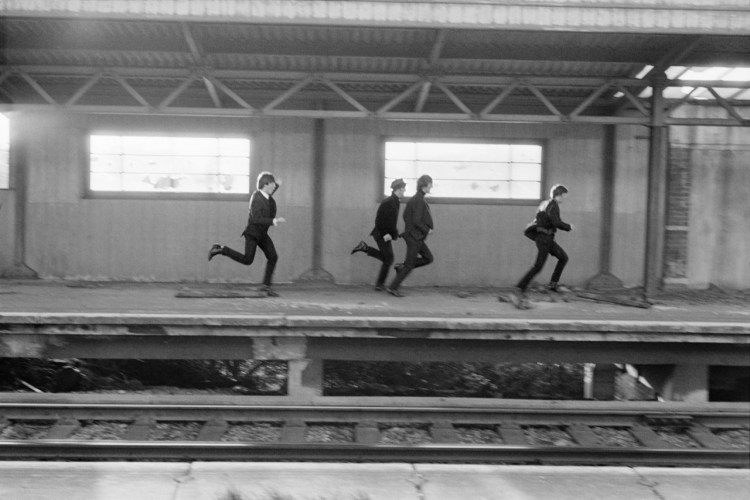
John Hughes still has The Breakfast Club and Ferris Bueller’s Day Off, which will remain fixtures of 1980s nostalgia till the end of time; in fact, having one or two enduring films seems to be the case for all these directors. For example, Richard Lester has A Hard Day’s Night.
A Hard Day’s Night was an amazingly youthful film with memorable Beatles moments and kinetic editing. It was pretty revolutionary for its time; it took aspects of the French New Wave and gave them their first noticeable appearance in English-language cinema. The film and its follow-up, Help!, would influence a wave of youthful films and the music video format. It was a groundbreaking film.
Many groundbreaking pop culture vehicles tend to have to wait decades before being given their plaudits; this wasn’t the case with Lester, who was instantly seen as a major director. His badly-aged The Knack… and How to Get It would win the 1965 Palme d’Or, and 1968’s Petulia is generally considered a major film in how Hollywood started incorporating modern European styles into their productions.
If one director managed to capture Swingin Britain, it was Lester, whose zany humour, flamboyant style and vital pacing captured the mood of an era. For a long time, he managed to straddle across the Atlantic, retaining a British charm to his American films. Yet, his perchance for a satirical wink and silliness wasn’t as appreciated in the 1970s, where he went from crowd-pleasing swashbucklers like The Three Musketeers to soppy Casablanca clone Cuba. There aren’t any great films during this era, and while I’m partial to some of these efforts, like Royal Flash, it’s hard to make the case that any are what you’d call essential films.
I’m not sure exactly when Lester’s star started to fall; he worked with major stars for decades, but it’s clear that at some point, there was a reevaluation of Lester, and nowadays, you’ll rarely see him considered a major director outside of his Beatles collaborations. On a personal level, I believe there’s something unique to Lester’s work, yes there are many which are forgettable, but there’s something attractive to many of his failures, films like A Funny Thing Happened on the Way to the Forum or The Bed Sitting Room don’t work in unfolding their ideas. Still, you can tell they’re packed with innovative plans. In my mind, Lester deserves a re-reappraisal. However, it feels like that will not happen until after his passing.
Cecil B. DeMille

Lester offered a zesty vitality to the cinema, and Hughes offered an authentic snapshot of teenage life. Even if a director’s esteem has fallen, it doesn’t mean their contributions aren’t still recognised; it just means they no longer hold the standing they once did within the industry. There is perhaps no director in cinema history who this is more obviously the case for than Cecil B. DeMille.
Forever enshrined in Billy Wilder’s Sunset Boulevard, DeMille was arguably the first tentpole director to whom’s films audiences flocked based not on the stars included or the stories but rather to see the latest work of DeMille, the man who understood what audiences wanted to see in a way none of his contemporaries did. It wasn’t until Hitchcock that this universal recognition would be achieved again; quite frankly, perhaps only Spielberg holds that place today.
DeMille was a pioneer of American cinema best known for his lavish, grandiose spectacles like The Ten Commandments and Cleopatra. They were epic, dramatic and exotic for audiences, offering them a glimpse at something they could barely imagine. In the early days of cinema DeMille’s epics were major box office successes, and he was widely celebrated for bringing compelling narratives to the big screen in such a large way.
DeMille spent his entire life on the fringes of critical acclaim. Generally, his films were well regarded, as seen by his Academy Award nominations, but he was seen as very populist and preachy. DeMille died as one of the most important directors of all time, yet nowadays, you’ll rarely find a person recognise his name on the streets, and the most ardent cinephiles will admit they haven’t really watched his films.
This change is due to a plethora of factors. Audiences’ tastes changed, film theory advanced, DeMille’s work was scrutinised for its emphasis on spectacle over nuanced storytelling, and critics generally agreed his films lacked subtlety or depth, instead opting for overblown drama. These films have been criticised for perpetuating racial stereotypes and are often needlessly evangelical. The simple answer is that cinema grew out of Cecil B. DeMille.
Perhaps an interesting point of comparison is the difference between the regard for DeMille and D. W. Griffith, similarly someone whose films became outdated for the general public taste and who certainly did more offensive things than DeMille. Yet, Griffith was the progenitor of much of the industry’s innovations, his films are deep and rich, and while certainly controversial, people generally accept his position in cinema. DeMille’s films weren’t as deep, rich or filled with innovation, so he is getting lost in the sands of time.
Joseph Losey
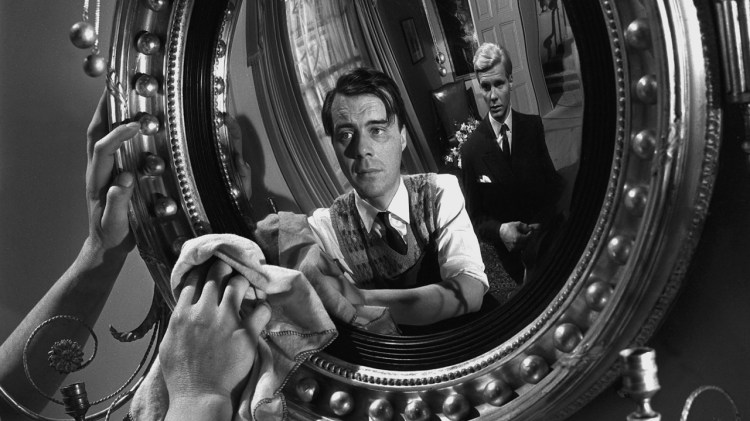
Richard Lester was an American director best known for his British films, and so is Joseph Losey, which makes an interesting question – do American expatriates’ reputations age worse? Perhaps, but then why is Alexander Mackendrick still beloved?
Joseph Losey’s career is one of the most interesting rollercoasters you can imagine. He starts as a Brechtian apprentice before finding success with film noirs and then being essentially exiled from his home country. Eventually, he found a home in Britain where he made arguably the most important British films of the decade with Harold Pinter; he soon found himself working in Europe with films like Mr Klein. In his heyday, Losey was one of the most well-acclaimed directors in the world, an unquestionable top 100 director.
Yet, you don’t get the feeling that Losey is that anymore. Unlike Hughes or Lester, Losey had a long career filled with gems from start to finish; every single era of his career has at least one gem. Losey had it all.
It was hard to figure out why he declined in reputation then. No, not every film was good, but most directors have at least as many duds as he does. So what is it? Do his films fall short of the cultural mores of the time? Somewhat. Are his later films worse than his earlier films? Yes, but that happens to most directors too.
In researching to find an answer, I ended up stumbling down a rabbit hole of French film critics I never knew existed. It seems like Losey’s reputation declined in tandem with the Mac Mahoniens, a French film club of the 1950s-60s that had a considerable influence over contemporary cinephilia. They worshipped four directors Walsh-Preminger-Lang and Losey, who made films in a direct style without embellishment, and as the Mac Mahoniens started to fade away, so did Losey’s influence and presence in the minds of film fans. Ironically, they celebrated Losey’s early film noir movies, while nowadays, his more cerebral films, like The Servant, are the ones which keep Losey’s reputation afloat nowadays.
Directors Who Have Lost Acclaim Over Time
And that’s about it. We’ve covered quite a few director’s rises and falls, you can check out the other versions below, but generally, I feel we’ve had a good look at directors whose reputation has fallen over time while avoiding the typical cliches of doing that, e.g. evaluating a directors acclaim due to their recent worse projects.
We’ve obviously not covered every director who ever fallen in esteem. You could go on for ages with directors like:
- Michael Bay
- Joel Schumacher
- Oliver Stone
- Richard Kelly
- Alan Parker
- Luc Besson
- John Landis
If you have any other directors who you think make for an interesting decline, make sure to leave them in the comments, as while I’m emotionally wrapping this topic up, I’m still as curious as ever and can’t help but wonder who could be the next big director to be reappraised in this way.
Part One: Reevaluated and Forgotten Film Directors
Part Two: Underrated Directors Whose Critical Reputation Has Fallen
 Bronze Screen Dream