
There are so many stories of great artists who lived their whole life never getting the recognition they deserve; this goes from artists like Vincent Van Gogh all the way to movie directors like Charles Burnett or Jacques Tourneur.
It’s a fascinating and captivating idea, the underappreciated artist who doesn’t make their art for fame or acclaim but because they have to. These singular talents make cinema great, but have you ever wondered what the inverse of these directors is? Who are the directors who have had notability snatched from their palms by the unmoving hand of popular opinion?
There are a lot of different ways you can look at this, and ultimately no one will agree on definitions, so I suppose we need to be clear that we’re using a vague sense of acclaim. No, we’re not tallying directors’ awards, but we acknowledge that they signal how they were viewed. We’re not going to compare Sarris’ pantheon to some modern critics. Nor will we argue that a director being popular is the same as being acclaimed.
Genre-Stylists

Acclaim is an elusive term. But you’d be hard-pressed to find a more famous and notable director in the 1990s than Tim Burton, who was lauded for his gothic style, visual quirks and inventiveness. He was a daring talent who, over a decade, put out multiple masterpieces, and they were treated like that; Ed Wood competed at Cannes! His films were truly unique; you knew when you saw a Burton movie, and not just because Johnny Depp and Helena Bonham Carter were in it.
But what was once fresh slowly became stale, and Burton ran out of inventiveness; what was once his strength had become his crutch. His new films have almost all been boring and unoriginal works. While this shouldn’t reflect badly on his original works, it has led to some re-evaluation which makes people question if there is any value to his work beyond those visual idiosyncrasies.
Other directors have made Burton-esque films, robbing the originals of their originality. Similarly, Robert Rodriguez was another director who rose to the top of the industry during the 1990s, having created low-budget DIY action films like El Mariachi and Desperado, which wowed with the compelling action sequences on a shoestring budget. For a short period, Rodriguez and Tarantino were two names permanently linked; they were the shining lights of an indie film scene on the ascendence. But like Burton, he rehashed the same films over and over again, and now people judge his originals harsher for that. He has stepped outside his comfort zone with larger high-concept films like Sin City and Alita: Battle Angel, but they aren’t universally acclaimed. While Sin City is well-loved, it does feel like some of Rodriguez’s unique voice was lost in the transition to big-budget filmmaking. He is a style over substance sort of director, and the further we get from his first films, the more that starts to tire us.
Golden-Agers
Time has a weird way of self-correcting; for example, Michael Cimino, who was once hailed as the greatest thing since sliced bread, had his career decimated by critics following Heaven’s Gate, but in the years since, especially the years following his death, he’s seen a reappraisal which has allowed him to resume his place in the pantheon. There’s a fair chance both Rodriguez and Burton will be able to do that, they still have loyal fanbases, and both have those iconic films which people will be drawn to.
Time isn’t always kind, though. When we look back at the Golden Age of Hollywood, we generally think about the screwball comedies of Howard Hawks or the vast westerns of John Ford; we don’t think about the sentimental dramas of Clarence Brown or the traditionalist works of Henry King.
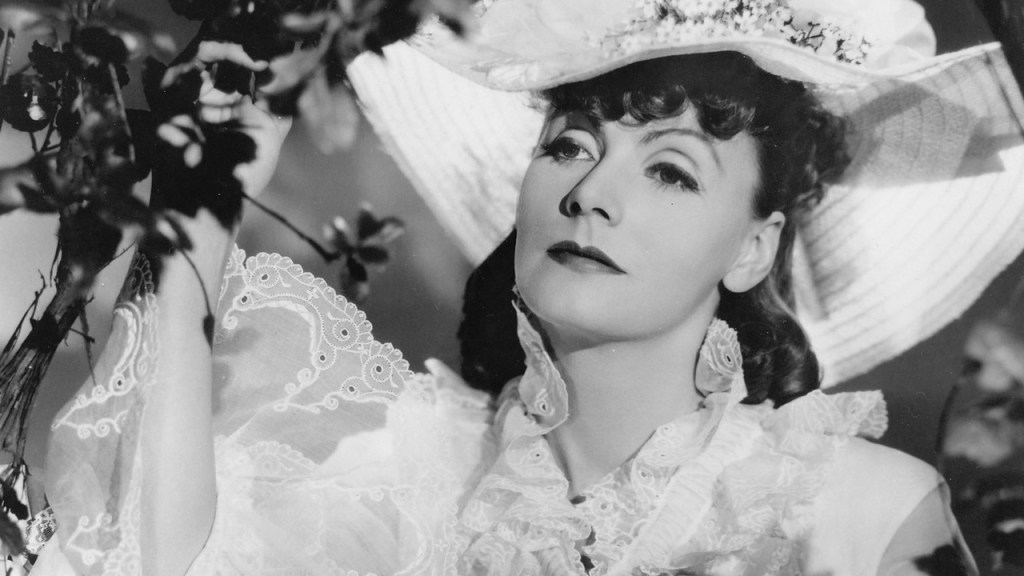
From the 1920s until the 1950s, Clarence Brown was a major figure in Hollywood; you might even recognise some of his films – Anna Karenina, The Yearling, Anna Christie, National Velvet – Although admittedly, none of these films is necessarily at the level of Gone with the Wind or other films of the era which have persevered in pop culture.
Brown was by any metric a major player in Hollywood; he was liked by actors, successful at the box office and nominated at the Academy Awards, yet as time moved on, it passed him by. Even as relatively forgotten contemporaries like Mitchell Leisen and William Dieterle have been afforded their time in the sun, Brown remains forgotten despite his prolific career.
However, the apathy towards Brown is understandable; he was more box-office focused than artistic; the people who loved his films at the cinema are by-and-large not with us anymore; he wasn’t a unique artist who pushed the boundaries. He was more one who flourished within them; Henry King wasn’t quite the same.
King was one of the first major American directors with Tol’able David, a masterpiece of the silent era, and created numerous classic films, from The Gunfighter, The Bravados, Twelve O’Clock High and The Song of Bernadette. King has the sort of filmography which rivals that of contemporaries like Raoul Walsh, yet he has never been afforded the same reappraisal. He was versatile, meticulous and adept at visual storytelling. But, he is no longer a serious figure in film history; he is barely a footnote.
Why? Honestly, it’s perplexing; with The Gunfighter, he has a film which is generally considered a masterpiece; with Tol’able David, he has a pioneering work. He made a lot of passe films, which are rubbish but so did so many of his contemporaries. Perhaps there is a case that his films’ themes just don’t resonate with the modern audience or that he doesn’t fit a strict auteur definition.
Rise and Fall

There is such a thing as too much expectation. You’ll see it all the time online nowadays, largely to do with upcoming releases. Didn’t you know the next Mario game will be the best ever? Then upon release, they castigate it. It’s weird, but it happens. And it’s happened to directors too, like M. Night Shyamalan and Neill Blomkamp, whose early successes set them up for acclaimed careers but also sabotaged their potential.
M. Night Shyamalan has been a figure of controversy in cinema since the early 2000s. Some of his films, like After Earth or The Last Airbender, are truly abysmal. Many of them are patently trash, almost like a bad B-movie you watch out of curiosity, but instead of being made by a low-budget passionate team, it is made by a big-studio-backed Shyamalan. How a man can direct The Happening and The Sixth Sense within ten years is perplexing, almost like a plot twist the man is known for.
We’re all used to the idea of the Shyamalan plot twist, but even still, The Sixth Sense remains a gripping watch filled with strong performances and a remarkably tight convincing script; there have been those who have tried to suggest it is a gimmick film like the rest of his filmography, but I disagreed, I believe it is a great film, which makes his subsequent decline depressing. Films like Unbreakable were well-liked, and Signs is pretty good but the rest…
He has experienced something of a revival with Split, but even that seems to have vanished by now with the likes of Old. It feels hard even to imagine a time when Shyamalan wasn’t a laughing stock in cinema, whose every movie is tired, but there was a point where he was considered the most promising talent in the world.
Neill Blomkamp wasn’t quite as hyped, but his debut film District 9 was a groundbreaking film which got a Best Picture nomination and was praised for its visual style, social commentary and innovative approach to sci-fi, coming from a country not particularly known in international cinema, we all wanted Blomkamp to succeed. But perhaps studio executives interfered too much, or he found himself out of his depths as the follow-ups, Elysium and Chappie, weren’t major works; they still had that signature style and themes, but they were much more vapid and empty style over substance.
Did this mean Blomkamp wasn’t growing as an artist, or was he simply lucky with his debut? Regardless of your interpretation, Blomkamp has struggled to resume his career. He has a Gran Turismo adaptation coming up, and I can’t claim to be excited about it.
Controversy

While the majority of falls from grace are linked to film quality and reevaluation, there are some directors whose esteem has fallen due to accusations which follow them. Roman Polanski, as we all know, has been a fugitive of justice living in France/Switzerland since the 1970s; he’s enjoyed what can only be described as an incredible career since then, too, having the sort of consistency which no director of his era, except Spielberg or Scorsese, could claim.
Yet, there will always be a moral quandary attached to him, a dilemma which doesn’t just shape his future films; it also causes a reevaluation of his past films. The ability to separate an artist from their work isn’t universal; I don’t blame people who think, ‘Why would I want to watch Polanski’s classics? He’s a monster.’
Will this have a long-standing effect on Polanski’s reputation? Perhaps, but there are so many directors whose actions probably wouldn’t be put up with as they were back then, so many powerful men who abused their position. So many abusers are still held up as paragons of the industry. So why won’t Polanski?
I don’t think we should judge a film by the actions of its creator; there are so many people involved in a film’s creation. Yet, I don’t blame anyone for criticising people who continue to support his work financially. It’s a weird line in the sand. My cynical opinion is that his reputation will slowly be rehabilitated when Polanski dies.
However, while Polanski’s films are loudly criticised, there doesn’t seem to be a major reappraisal of them, just him and his place; no one says ‘Chinatown was trash.’ Yet, people sometimes say that for Annie Hall or Manhattan, Woody Allen is, of course, entangled in allegations, the veracity of which I’m not even going to wade into.
However, there feels like there has been a more serious reappraisal of his work, a more public backlash; perhaps it is because Polanski’s case is cut and dry, while Allen’s is opaque and thus more interesting.
You can find other cases of these backlashes based on personal controversies. Mel Gibson is certainly more dismissed as a director than he should be, even if he likes playing it loose with historical accuracy.
Cahier du Cinema Fallouts
Perhaps my personal favourite period in film history is the French New Wave era of the 1960s, where the rulebooks were thrown out, and cinema was reevaluated with new eyes; this would lead to directors like Howard Hawks, Jacques Tati and Robert Aldrich worshipped and elevated to new highs. Yet, the New Wave did, in some cases, criticise too much, too often.
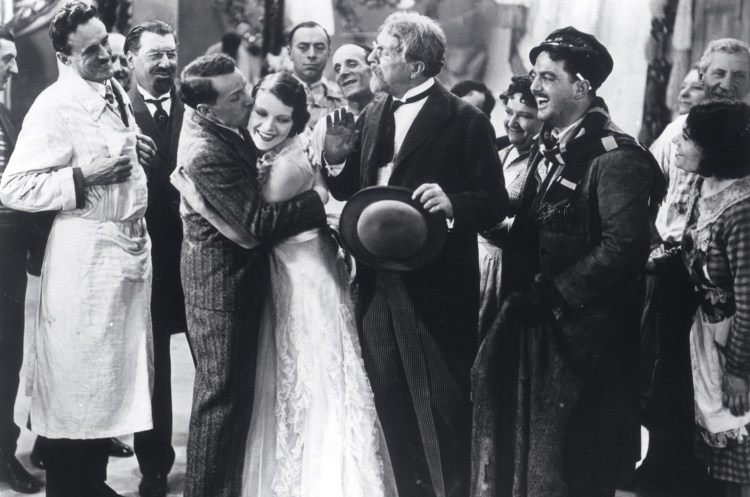
There are numerous directors who they were critical of who deserved it, yet Rene Clair was not one of them. Clair was one of the most important filmmakers in French history, making classic early films like Under the Roofs of Paris and A Nous la Liberte; his films blended surrealism and social commentary and influenced filmmakers worldwide.
Yet critics like Francois Truffaut named Clair’s works as bland, unadventurous and too traditional. Clair’s later era was more conservative than the New Wave’s films, but the critics greatly disregarded Clair’s importance in the medium and the brilliance of his early work.
The criticisms of Clair would stick to his legacy until his death. In recent years, we have seen a critical reappraisal of his work, and he is now once more mentioned as a great director. Still, he is rarely seen as the equal of directors once considered lesser contemporaries.
The New Wave were critical of many directors, such as Jean Delannoy, whose traditional films were decried as lacking artistic experimentation, or Andre Hunebelle, whose crime thrillers were dismissed as too commercial and lacking artistic merit. Similarly, Julien Duvivier, who, like Clair, was a major filmmaker since the 1920s, was considered old-fashioned and Marcel Carne, whose films were mocked as being too theatrical and divorced from reality.
An interesting case is Gerard Oury, who was best known for his comedies of the 1960s and 1970s; unlike these other directors, Oury was a contemporary of the New Wave, who existed at the same time. Yet they dismissed his films as populist, broad and lacking in artistic depth. This might be true for some of his works, but this is entirely unfair for some. Nowadays, Oury has enjoyed a reappraisal for his films like Don’t Look Now… We’re Being Shot At, yet his reputation is still stained with the allegations of populism with which the New Wave tagged him.
There are so many cases of once-celebrated directors becoming slowly dismissed to obscurity that we’ll follow up on these in another article, as I have plenty of different directors who are forgotten for various reasons. If you know of any which fit the bill, please mention them in the comments, as I find this a really peculiar aspect of film history that we rarely talk about.
 Bronze Screen Dream
One response to “Reevaluated and Forgotten Film Directors”
[…] Part One: Reevaluated and Forgotten Film Directors […]
LikeLike