
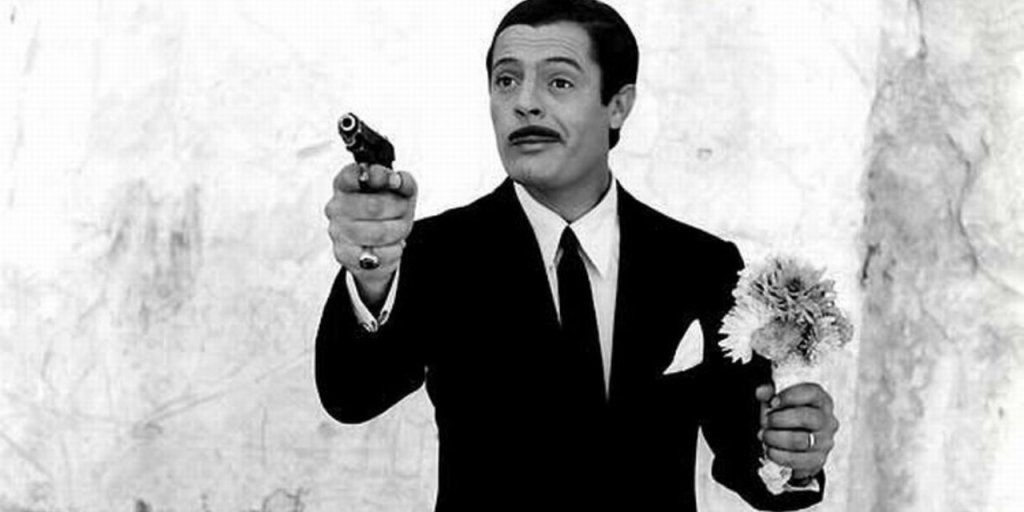
What happens when the dark despair of an unhappy marriage collides with the absurd humour of a desperate escape plan?
Italian cinema of the 1960s was a flourishing space of extraordinary talents and groundbreaking films. While we typically reflect on the grandeur of Visconti or the surrealistic spectacle of Fellini, Pietro Germi‘s biting black comedy, Divorce Italian Style (1961), remains an underappreciated masterpiece. The film ingeniously blends elements of neorealism with a caustic sense of humour, securing its position as a cornerstone of Italian cinema.
The narrative centres around Ferdinando Cefalù, a Sicilian baron played by the magnetic Marcello Mastroianni. Trapped in a lifeless marriage with Rosalia (Daniela Rocca), Ferdinando is besotted by his young, attractive cousin Angela, portrayed by Stefania Sandrelli. With divorce forbidden by Italy’s rigid laws of the time, Ferdinando devises a hilariously macabre plan: to murder his wife and wed Angela.
In this article, we delve into the depths of this film, scrutinising its satirical critique of Italian society, its brilliant use of humour, the intricate characterisation of Ferdinando, the exploration of passion and desire, Germi’s distinct cinematic style, and its critical stance on the restrictive divorce laws of the era.
Sharp Satire
Divorce Italian Style serves as a unique snapshot of a time and place dominated by societal pressures, hypocrisy, and archaic traditions. The film goes beyond mere entertaining farce; it is a profound satire on 1960s Italian society.
At the heart of the film’s narrative is Ferdinando Cefalù, a Sicilian nobleman ensnared in a loveless marriage, pining for the youthful Angela while being restrained by a strict Catholic culture that disallows divorce. His solution to this predicament, albeit comic, takes a dark turn – considering murder as his only liberation, highlighting the paradoxical societal context where homicide seems ironically permissible as an alternative to divorce.
Through Divorce Italian Style, Germi presents a fine lattice of social mores that exert an oppressive influence over individual lives. In an era where divorce was prohibited, and gender norms were rigid, Germi employs satire to critique these societal norms’ absurdity. The film brings the ludicrousness of the situation to light with a blend of humour and irony, making us laugh and squirm at the same time.
Germi’s nuanced depiction of gender double standards is particularly insightful. Ferdinando’s plotting to murder his wife to pursue a relationship with his cousin is overlooked, largely due to his aristocratic status and gender. In contrast, Rosalia is relentlessly scrutinised and expected to embody the ideal of the dutiful wife, despite her husband’s blatant infractions.
Through his portrayal of these societal hypocrisies, Germi lays the groundwork for a call to change. While the film’s cultural impact extends beyond Italian society, its commentary on the human condition resonates universally.
Clever Use of Comedy
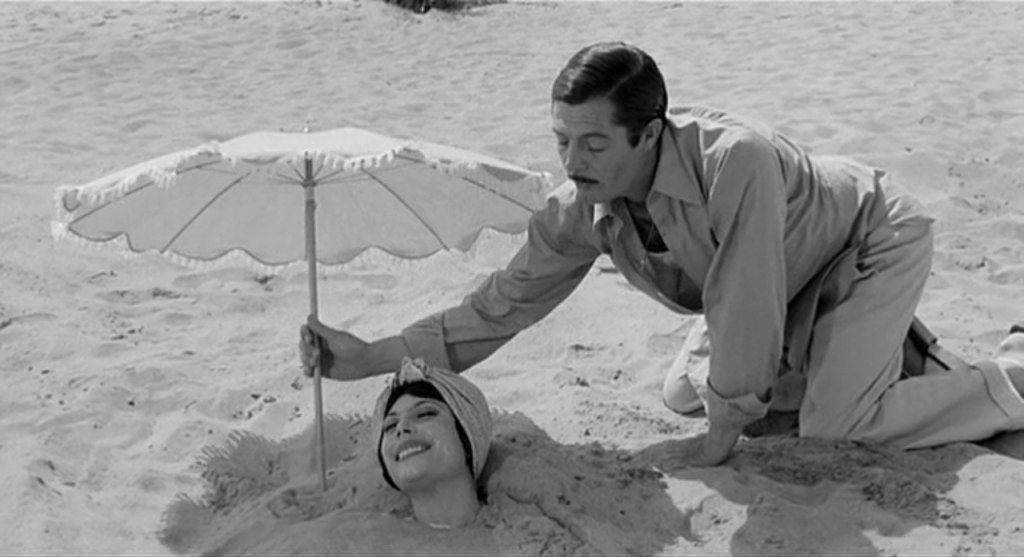
Divorce Italian Style skillfully uses humour to paint the narrative’s absurdity and offers a fresh perspective for exploring the embedded cultural issues.
Germi transforms the ominous premise of a man plotting to murder his wife for a relationship with his cousin into a comic exploration of Italian society’s hypocrisies. The clever dialogue and effective use of irony and visual comedy serve not only as entertainment but also as a subtle critique of the characters’ inconsistencies.
The film’s protagonist, Ferdinando, is a shining example of this approach. His twisted machinations played out with a flair for the absurd, reveal his desperation in an amusing yet thought-provoking manner. This blend of humour and pathos can also be seen in the works of the Coen Brothers.
Through satire, irony, witty dialogue, and innovative filmmaking techniques, Germi strikes a balance between addressing serious issues and keeping the audience amused throughout.
Marcello Mastroianni
At the heart of the humour and satire in Divorce Italian Style is Ferdinando Cefalù, a complex amalgamation of frustrations, desires, and flawed morality. Marcello Mastroianni’s expert portrayal brings depth to the film’s comedic momentum and underlying social critique.
Ferdinando, shaped by the societal norms that Germi satirises, is a man caught between a loveless marriage and an illicit desire. His character serves as a mirror reflecting the hypocrisies of the social structure that moulded him. His cynical mindset and disregard for life’s sanctity highlight the absurd lengths he will go to satisfy his desires.
Mastroianni’s portrayal of Ferdinando is reminiscent of characters in Billy Wilder‘s films, where protagonists often wrestle with their moral shortcomings amidst humorous circumstances. Through Ferdinando, Germi seamlessly integrates satire, social commentary, and entertainment, illuminating the complex relationship between individual actions and societal norms.
Embodying Passion & Desire
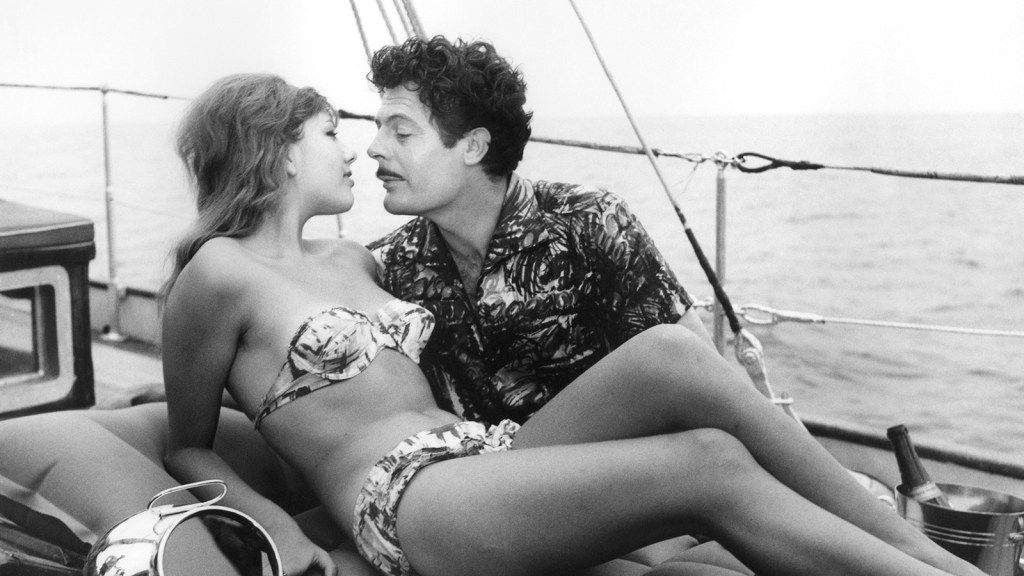
Integral to Divorce Italian Style’s narrative fabric is the undercurrent of passion, desire, and sexual frustration. A nuanced understanding of these themes offers crucial insights into the protagonist, Ferdinando Cefalù, and the film’s exploration of human relationships.
Ferdinando’s infatuation with his youthful cousin, Angela, is an emblem of his longing for passionate love, vitality, and, most significantly, an escape from his stifling marital bonds. His pursuit of passion spirals into a macabre plot to murder his wife, a darkly humorous reflection on how societal limitations can distort human desires.
Germi navigates these themes with tact and wit, crafting a narrative in which the pursuit of desire propels the plot. It’s a common motif throughout Germi’s filmography. For instance, in Seduced and Abandoned, the protagonist’s sexual impulses lead to a sequence of both comical and tragic incidents. Germi’s brilliance lies in his capacity to expose the underlying tensions surrounding these desires, painting individuals and society grappling with their passions and frustrations.
Moreover, Germi meticulously examines the complexities of human relationships through these themes of passion and desire. His works consistently portray the clash between personal impulses and societal expectations. In Divorce Italian Style, Ferdinando’s yearning for Angela and his discontent with Rosalia exemplify the intricate dynamics of love, matrimony, and infidelity.
Pietro Germi’s Directing Style
Pietro Germi’s masterful direction in Divorce Italian Style melds elements of neorealism with black comedy, resulting in entertaining and provocative cinema. His signature directorial approach underpins the film’s themes, from passion and desire to societal critique.
Germi’s style is characterised by a keen emphasis on visual storytelling. In Divorce Italian Style, the Sicilian locale is critical to the narrative. His expansive shots of Sicilian landscapes and cityscapes serve as a scenic canvas for the story, simultaneously accentuating the region’s natural allure and unique cultural quirks.
Simultaneously, Germi’s meticulous attention to set design and interiors offers an intimate glimpse into the characters’ lives, lending a layer of authenticity to the narrative. His precision is visible in every frame, from Ferdinando’s opulent abode to Angela’s quaint home, reflecting the characters’ status, aspirations, and constraints.
His mastery of black comedy manifests in Divorce Italian Style, where he seamlessly integrates humour within the narrative while tackling profound themes. Under his direction, Ferdinando’s heinous plot to murder his wife incites laughter without diminishing the act’s severity.
Sicilian Divorce Farce
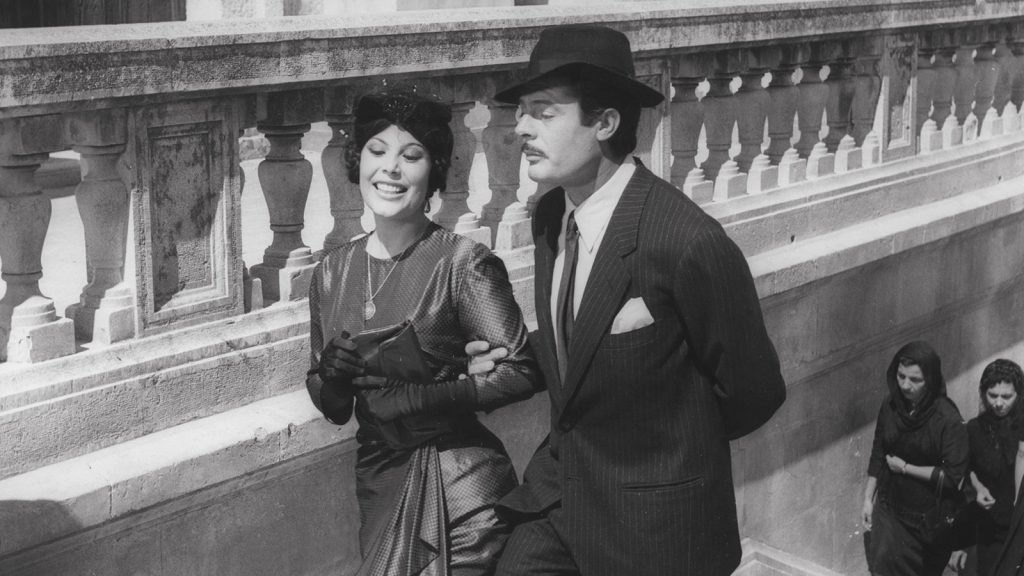
At its core, Divorce Italian Style is a searing social critique of the constrictive divorce laws of 1960s Italy. The film incisively mirrors societal norms of the era, employing humour and satire to underscore the necessity for progressive change.
Ferdinando’s elaborate scheme to escape his loveless marriage signifies the extremes one might consider to evade the law. The fact that murder seems a more viable option than divorce for Ferdinando underscores the absurdity of the prevailing societal regulations.
The film’s exploration of divorce laws also illuminates the entrenched patriarchal norms. The legal and societal barriers that bind Ferdinando and his wife, Rosalia, are heavily skewed towards the former’s benefit. This gender-based critique resonates with other Germi films, notably Seduced and Abandoned, where a young woman confronts the repercussions of societal norms and laws that favour men.
Pietro Germi’s Divorce Italian Style: A Final Reflection
Divorce Italian Style is a delicious amalgamation of humour, satire, social commentary, and profound themes. The film engages the audience on multiple levels, from its searing satire critiquing Italian society to the dark humour that induces laughter and reflection.
Divorce Italian Style may not resonate with everyone. Its dark humour may unsettle some, and Ferdinando’s morally dubious actions may not garner universal sympathy. However, despite these potential challenges, Divorce Italian Style is a significant contribution to Italian and global cinema.
More than six decades on, as we laugh at Germi’s absurdly desperate protagonist and recoil at the societal norms he satirizes, we must ask ourselves: How much has truly changed? Are we still bound by the same cultural constraints, just dressed in modern attire?
 Bronze Screen Dream