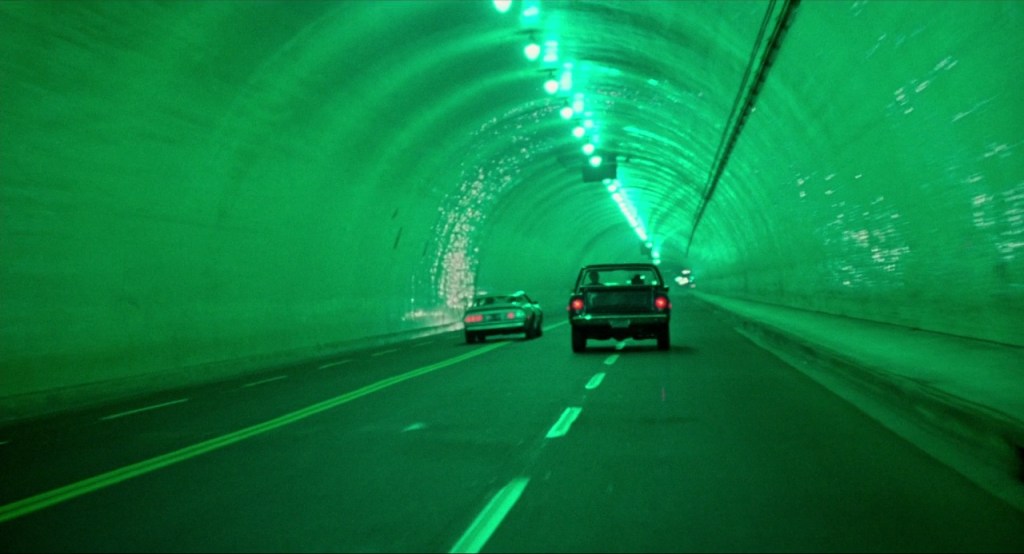
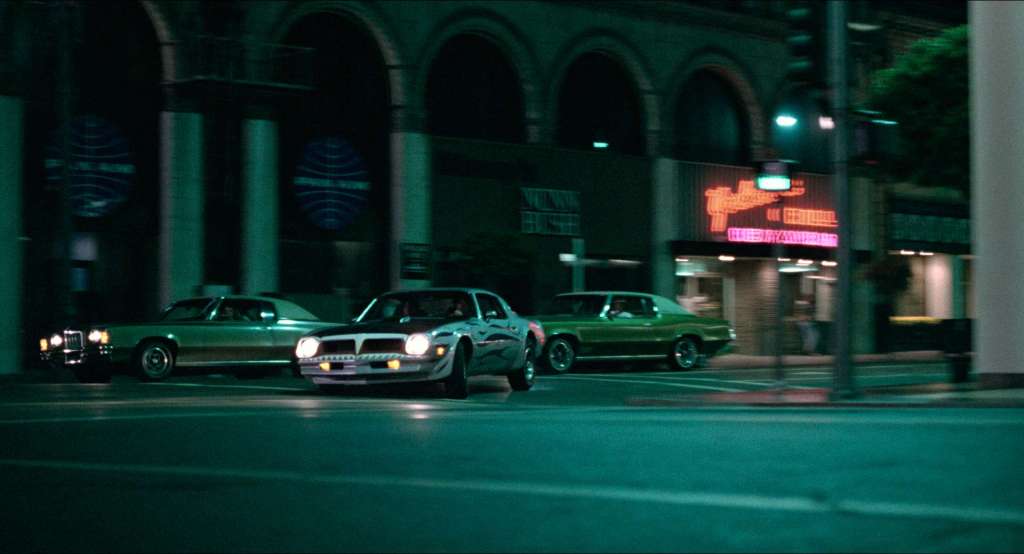
There’s a palpable sense of atmosphere in Walter Hill‘s The Driver that leaves a mark on the viewer, elevating the film beyond a standard cat-and-mouse chase. Hill’s expert eye captures the grit and grime of the urban landscape, constructing a noir-infused underworld where criminals and cops exist on opposite ends of the same dark spectrum. Through his lens, the cityscape is not just a backdrop but an integral character, shaping and reflecting the protagonist’s journey.
The striking visuals of The Driver depict a dark and moody environment where the shadows stretch and yawn, enveloping the characters in a suffocating embrace. The sparse, noir-ish aesthetic is a stunning homage to the French New Wave, particularly the works of Jean-Pierre Melville. Like Melville, Hill uses his setting to evoke a sense of dread and existential despair. The nocturnal streets are hauntingly deserted, the empty roads echo with a hollow emptiness, and the characters appear lost in the sprawling urban maze, their futures as bleak and unending as the concrete structures surrounding them.
Equally important to the creation of this atmosphere is the film’s soundtrack. The sparse and minimalist score perfectly complements the stripped-down visuals, echoing the loneliness and isolation of the characters. The Electronic music gives the film a distinct flavour, creating a rhythmic pulse that drives the narrative forward. Each beat is akin to the ticking of a clock, reminding the characters (and the audience) of the passing time and the ratcheting tension. It’s a masterclass in how a score can be used to enhance the tension of a film without being overt or intrusive.
There’s an interesting parallel to be drawn with another of Hill’s works, Hard Times, which similarly used its Depression-era setting to imbue the film with desperation and determination. Much like in The Driver, the setting in Hard Times isn’t merely a stage for the characters to perform on but a living, breathing entity that shapes their motivations and decisions.
The Driver’s visual style and atmospheric soundtrack enhance the film’s overall tone and style, setting it apart from other neo-noir hits. The bleak urban jungle is a common theme in Hill’s work, a grim reminder of the harsh reality that his characters inhabit, forever running, forever chasing, never quite reaching the safety of daylight.

Minimal Dialogue
At first glance, the sparse dialogue of The Driver could be mistaken for a limitation. But, upon closer inspection, one realises it’s Hill’s deliberate, stylistic choice to distil the narrative down to its most basic, elemental form. Just as the settings and the soundtrack play vital roles in establishing the film’s atmosphere, the minimalist dialogue reinforces the story’s suspenseful, noir-esque quality.
The Driver doesn’t rely on long, winding monologues or dramatic exchanges to flesh out its characters. Instead, it focuses on actions and expressions, gestures, and glances, creating a cinematic language that’s as evocative, if not more so, than verbose dialogue. The characters communicate through the revving of engines, the squeal of tires, and the narrow escapes from high-speed pursuits. Every slam of the car door, every silent standoff, carries more weight than words, underscoring the tension and danger inherent in their criminal world.
This approach provides a new dimension to the characters. The Driver, played by Ryan O’Neal, is a man of few words, yet his stoicism speaks volumes about his personality. His calculated and precise actions reveal a professionalism that defines his character far better than any verbal exposition. The relentless detective, played by Bruce Dern, is equally taciturn, and his obsessive pursuit is conveyed more through his dogged determination than any verbal threats.
There’s a subtle undercurrent of suspense that permeates the film because of the lack of dialogue. It adds to the enigmatic aura of the characters and keeps the audience guessing about their intentions and motivations. We are compelled to look closer, read between the lines and interpret the silent cues, enhancing our engagement with the film. This minimalist dialogue is a feature of many Hill films, including his seminal The Warriors.
Hill’s The Driver uses minimal dialogue to create an air of mystery and tension, allowing the characters to communicate through actions and expressions. This choice reflects the director’s commitment to atmospheric storytelling, stripping away the frills and laying bare the raw nerve of the narrative.
The Driver is a reminder that cinema is a visual medium, first and foremost. It shows us that words can sometimes fall short, but a well-timed glance, a silent exchange, or a thrilling car chase can convey emotions and advance the narrative in ways that dialogue can’t. It’s a testament to Hill’s ability to engage and captivate his audience through the sheer power of visual storytelling.
The Driver’s Driver
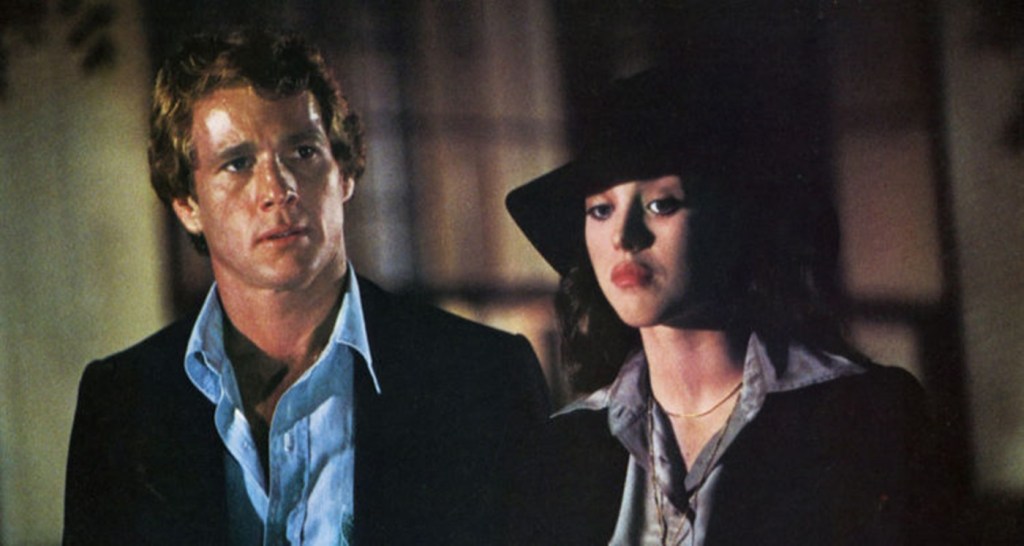
The Driver’s minimal dialogue and atmospheric setting find their perfect complement in the film’s enigmatic protagonist, the unnamed Driver, played by Ryan O’Neal. His character is the heart of the narrative, his persona as elusive and intriguing as the shadowy cityscapes he navigates.
There’s an appealing mystery to O’Neal’s Driver, a mystery borne out of his silence and stoicism. He doesn’t waste words or reveal his thoughts or feelings easily. Instead, his actions serve as the voice for his character. He communicates his character’s essence through grit, determination, and exceptional driving skills. His precision behind the wheel and ability to elude capture echo his emotionally guarded personality, making it clear that this is a man who values control and discretion above all else.
The Driver isn’t a conventional anti-hero; Hill portrays him not as a criminal with a heart of gold but rather as a professional committed to his craft. There’s an air of detachment to his character, his motivations purely driven by the thrill and the paycheck. He doesn’t rob or kill; he simply drives. His talents lie in his ability to manipulate the city’s labyrinthine streets to his advantage, outsmarting the police at every turn with his daring manoeuvres and intimate knowledge of the urban terrain.
The Driver propels the plot forward but also provides the lens through which we experience the noirish world of The Driver. His cool, detached demeanour is mirrored in the film’s sparse dialogue and minimalist soundtrack, creating a sense of harmony between character and cinematic style. His silent resilience against the determined detective is the plot’s driving force, and his cunning escape routes form the high-adrenaline sequences that make The Driver such a gripping watch.
Drawing parallels again with The Warriors, we see another example of an enigmatic lead in Swan, who leads his gang through hostile territory with minimal dialogue and a lot of action. The Driver’s characterisation embodies Hill’s thematic and stylistic signatures, crafting an unforgettable figure who manoeuvres through a world of peril with quiet determination and steely precision.
The Detective
On the other side of the law, standing in stark contrast to the Driver, we find the equally driven Detective, brought to life on screen by Bruce Dern. The Detective is a relentless force of justice, single-minded in his pursuit of the Driver. Their relationship forms the crux of the film, creating an escalating cat-and-mouse game that infuses The Driver with its underlying tension and suspense.
Dern’s Detective is not your typical white-hatted law enforcer. Much like his quarry, he exists in the murky grey areas of his profession, straddling the fine line between the legal and the illicit. His methods might not always adhere strictly to the rules, but his motivations are clear – to catch the Driver at any cost. This relentless determination adds a layer of intensity to his character, making him a worthy adversary to the Driver.
The Detective’s dogged pursuit of the Driver is marked by an almost personal obsession. He is willing to go to great lengths to achieve his objective, even using other criminals as bait to lure the Driver out. This obsession not only enhances the suspense of the narrative but also adds depth to his character. He is more than a simple embodiment of law enforcement; he becomes a symbol of the unstoppable force colliding with an immovable object, personified by the Driver.
This dynamic between the Driver and the Detective propels the narrative of The Driver. It’s a high-stakes chess game, with the city streets serving as the board. Each move, each chase, each narrow escape heightens the tension, drawing us deeper into their rivalry. The back-and-forth between the two characters adds a rhythmic pulse to the film, mirroring the revving engines and squealing tires that punctuate their encounters.
Looking again at The Warriors, a similar theme of relentless pursuit is present. The gang is hounded by various factions wanting to bring them down, much like the Detective hounding the Driver. However, in The Driver, the focus is much more personal and intense, centring on this two-handed game between the Driver and the Detective.
Dern’s Detective adds a critical dimension to The Driver. His relentless pursuit of O’Neal’s character sets the stage for an adrenaline-fueled chase that keeps the audience on the edge of their seats, reinforcing Walter Hill’s mastery in weaving suspenseful narratives with deeply engaging characters. This relentless pursuit, painted against a gritty, nocturnal cityscape backdrop, encapsulates Hill’s filmography’s essence.
The Heist
The Driver’s story stretches around a series of meticulously planned robberies, setting the stage for the intense, kinetic chase sequences that have become a hallmark of Hill’s style. The Driver’s role in these heists, as the go-to getaway driver, forms the backbone of the plot and catalyses the high-stakes cat-and-mouse game with the relentless Detective.
The heists in The Driver are not just about the adrenaline-fueled rush of stealing and escaping. They serve as a narrative tool, a window into the professional and personal world of the Driver. The Driver’s participation in these heists is a testament to his precision and skill, his ability to stay one step ahead of law enforcement, and, most significantly, his almost artistic dedication to his craft. Each heist showcases the Driver’s talent behind the wheel and his ability to manipulate the urban maze to his advantage, whether evading capture or ensuring the successful completion of a job.
For the Detective, these heists provide the arena where he can match his wits against the Driver. Each robbery sharpens the Detective’s resolve, pushing him further into obsession as he tries to anticipate the Driver’s next move. This escalation sets the rhythm of the narrative, intensifying the suspense and raising the stakes with each subsequent heist.
These heists are not just plot devices but expertly choreographed action sequences, a testament to Hill’s ability to create tense, edge-of-your-seat moments. The thrilling car chases, the squeal of tires, the narrowly avoided collisions – all are direct consequences of these high-stakes robberies, transforming the city into a battleground for the Driver and the Detective.
Comparing this again to Hill’s The Warriors, the gang’s journey through the city can be viewed as a series of “heists”, each marked by its own unique set of challenges. In both films, the goal is survival and escape, be it from a heist gone wrong or rival gangs on the prowl. However, the stakes are arguably higher in The Driver, given its emphasis on the personal rivalry between the Driver and the Detective.
The heists in The Driver also hark back to the traditions of film noir, a genre where crime is often central to the narrative. As seen in classic films such as The Asphalt Jungle, heists serve as a commentary on the societal and personal motivations of characters on the fringes of legality. In The Driver, the Driver’s participation in these heists is an echo of his existential struggle, and his profession is a reflection of his steely, enigmatic character.
By featuring a series of intricately planned heists, The Driver provides the backdrop for a thrilling pursuit while examining the psyche of its titular character. The high-stakes robberies and the subsequent chase sequences drive the plot forward and offer profound insight into the Driver’s mind and his relentless pursuer, the Detective, ultimately showcasing Hill’s ability to combine intense action with deep character exploration.
Car Chases
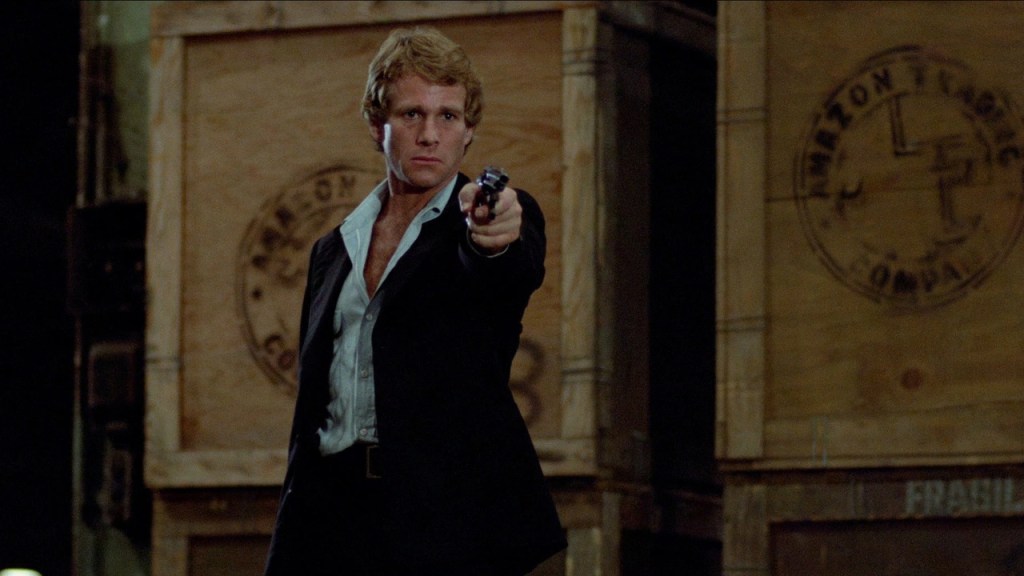
One of the defining elements of The Driver that sets it apart from other crime thrillers of its time, and indeed, within the broader scope of Walter Hill’s filmography, are the exhilarating car chase sequences. More than mere set pieces, these car chases are an integral part of the film’s narrative fabric. They’re arguably some of the best car chases of an era filled with excellent car chase scenes; see The French Connection and The Italian Job. They contribute to the excitement and tension and visually manifest the high-stakes rivalry between the Driver and the Detective.
Each car chase is meticulously choreographed and expertly executed. They play out like intricate dances between vehicles, the city streets serving as the stage. The Driver’s precision and skill are on full display as he manoeuvres through the urban maze, making split-second decisions, taking tight turns and threading the needle through narrow alleyways. These sequences create pulse-pounding moments that drive home the risks and dangers inherent in the Driver’s profession and define the audacious and daring nature of his character.
Equally impressive is the film’s approach to these chases from a cinematographic standpoint. Hill’s direction, combined with Philip Lathrop’s cinematography, transforms these high-speed pursuits into visual poetry. These sequences have a gritty elegance, with each cut and camera movement capturing the adrenaline and danger of the chases while showcasing the urban sprawl’s unforgiving terrain.
For the Detective, these car chases represent repeated challenges, each a new opportunity to apprehend his elusive target. His dogged determination echoes in the roaring engines and screeching tires as he tries to match the Driver’s skill and audacity. This relentless pursuit punctuates the narrative with heightened tension, feeding the film’s suspense.
Car chases represent the undercurrent of danger running through the neo-noir genre. Films like Bullitt, which Hill was second assistant director on, are renowned for their car chase sequences, which elevate the tension and stakes. Hill builds upon this tradition, crafting chases that are not just thrilling set-pieces but integral to The Driver’s narrative and character development.
In essence, the car chases in The Driver are much more than an adrenaline-fueled spectacle. They are crucial narrative tools that shape the characters, drive the plot, and embody the film’s underlying themes. The chases are character-defining moments, battlegrounds for the ongoing war between the Driver and the Detective, and cinematic milestones contributing to The Driver’s enduring impact on the crime-thriller genre.

Ambiguous Characters
Hill’s film revels in the grey areas of morality, crafting characters that eschew traditional good-and-evil archetypes for a more nuanced exploration of human nature, motivation, and identity. This nuanced characterisation, coupled with the atmospheric setting, minimal dialogue, high-stakes heists, and intense car chases, provides a remarkable depth to the narrative.
Both the Driver and the Detective, the film’s central figures, are characterised by their ambiguous motivations and actions. The Driver, despite his criminal profession, is not an outright villain. He’s a man of principles within his chosen line of work, emphasising professionalism and precision and showing no appetite for violence. His motivation is not driven by a love of crime but a dedication to his craft, the thrill of the chase, and the freedom it represents.
On the other hand, the Detective’s commitment to law enforcement is underscored by his obsession with capturing the Driver, even if it means bending or breaking the rules. He represents the blurred line between law enforcement and criminality, his actions often mirroring those he pursues. The dichotomy of his character lies in his willingness to venture into morally ambiguous territories for what he perceives as the greater good.
Trust issues and betrayal further add layers to these characters. The Driver’s profession is laced with risk, not just from the law but from the criminals he works with. His relationship with his clients, marked by suspicion and contingency, underscores the precariousness of his profession. The climactic betrayal in the film emphasises this aspect, underlining the fragility of trust within the underworld.
Parallel to this, the Detective’s relentless pursuit of justice often leads him to manipulate his informants and subordinates, highlighting his struggle with trust. This duality enhances the narrative tension and further blurs the line between the law enforcer and the outlaw.
Taking cues from classic film noir, where protagonists often tread the line between lawfulness and criminality, The Driver infuses its characters with similar ambiguity. The result is a film populated by compellingly complex figures navigating a world that defies binary morality. This rich character ambiguity contributes significantly to the film’s narrative depth and thematic complexity, solidifying The Driver’s position as a seminal work in Hill’s oeuvre and the wider crime-thriller genre.
Final Thoughts
When you look deeply into a film, you sometimes lose your gut feeling about it. When waxing about the film’s fantastic moments, you can lose sight of its weaknesses. The Driver isn’t the perfect film, it has perfect aspects, like its atmosphere and minimalism, but there are some pretty obvious things that might rub you the wrong way.
One common criticism of The Driver is its lack of character development and depth. The minimalist dialogue and focus on action over exposition may leave some viewers wanting more insight into the characters’ motivations and backstories. The Driver himself remains enigmatic throughout the film, which can be seen as a strength in creating a mysterious atmosphere but may also lead to a lack of emotional connection with the audience. Additionally, the supporting characters, such as the detective played by Bruce Dern, receive limited development and can feel one-dimensional.
Another complaint often voiced is the film’s slow pace. While effective in building tension, the deliberate and methodical approach to storytelling may be frustrating for viewers seeking a faster-paced, more action-packed experience. The prolonged car chase sequences, while thrilling, may lose their impact for some due to their extended duration.
Furthermore, the plot of The Driver lacks originality and falls into familiar genre tropes. The cat-and-mouse chase between the Driver and the detective is a classic narrative structure in crime films, and at intervals, it verges on being predictable and formulaic. While the film’s style and execution elevate it beyond a standard genre entry, the plot offers few surprises or unique twists.
However, every film is different for each new set of eyes. Some will see the quietness, lack of development and slow pacing and start to yawn, but some will see these as the key elements that make the film feel outstanding.
Its atmospheric visuals, minimalist dialogue, and enigmatic protagonist create a distinctive and immersive cinematic experience. The deliberate pacing allows tension to build gradually, and the extended car chase sequences showcase the technical prowess and expertise of the Driver character. Listen, it might not be the perfect film, but that doesn’t mean I’m not going to rewatch it.
 Bronze Screen Dream