

Stanley Kramer, a filmmaker synonymous with controversy, passion, and a relentless pursuit of social justice, carved a unique niche for himself in Hollywood. Known for his fearless exploration of contentious social and political issues, Kramer’s career is studded with an impressive roster of ‘message films’. These films – often uncomfortable, always illuminating – opened the door to profound dialogues on topics that many preferred to sidestep.
From challenging racial prejudice in Guess Who’s Coming to Dinner to dissecting the dark aftermath of nuclear war in On The Beach, Kramer’s oeuvre encompassed a broad spectrum of thought-provoking themes. His tenacity in spotlighting these issues often saw him at odds with the conventional Hollywood system, yet Kramer remained undeterred.
Kramer’s career is an intriguing paradox. Despite his contributions to Hollywood and the impact of his films, he never achieved the widespread acclaim or recognition afforded to many of his contemporaries. Some critics suggest that his focus on message films, coupled with his refusal to shy away from controversial subjects, might have overshadowed his artistic prowess. The weightiness of his themes, often conveyed with a heavy hand, was perceived as overshadowing cinematic artistry.
Yet, it is exactly these reasons that make Stanley Kramer’s films worth revisiting. His narrative style might lack subtlety, but his films’ messages and the conversations they sparked are undeniable. Stanley Kramer might not have been Hollywood’s darling, but he was, without question, a crucial figure during a transformative decade for American cinema. In the ensuing exploration, we delve deeper into the idiosyncrasies of Stanley Kramer’s directorial style, giving his powerful, poignant, and persistently provocative works the attention they deserve.

Social and Political Commentary
At the heart of Stanley Kramer’s directorial style was his drive to utilise cinema as a tool for change. His films, rather than being simple escapes into fantasy, acted as social microscopes, examining some of the most pressing issues of the times. In boldly confronting societal norms, Kramer provided a raw and unfiltered portrayal of reality, a far cry from the sterilised presentations often witnessed in Hollywood.
Guess Who’s Coming to Dinner is one film that encapsulates Kramer’s style of dealing with social and political issues. The film boldly tackled the issue of interracial marriage at a time when it was still illegal in many states in America. In this film, Kramer didn’t shy away from presenting the complexity of acceptance and the societal ramifications involved in breaking racial barriers.
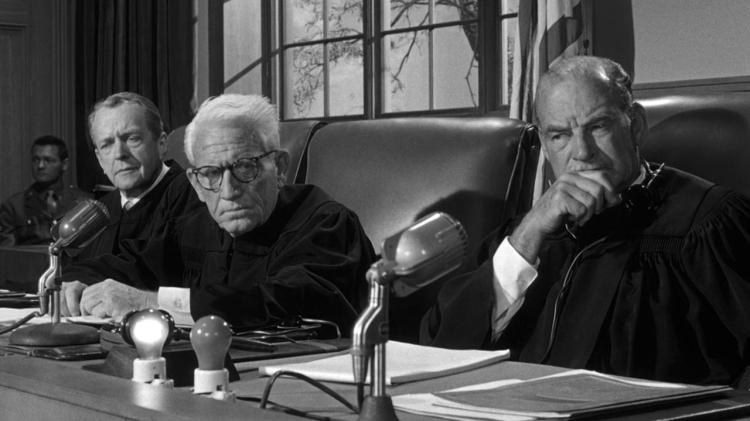
Similarly, Inherit the Wind highlights Kramer’s focus on important societal issues. Here, he tackled the timeless debate between religion and science, drawing from the famous Scopes Monkey Trial of the 1920s. The trial scenes in this film, which were intense, intellectually stimulating, and emotionally charged, emphasised the significance of freedom of thought and the necessity to challenge established norms.
Kramer’s films also had a significant political bent. This can be seen in films like On The Beach and Judgment at Nuremberg, where he explored topics as varied as nuclear annihilation and war crimes. In On The Beach, the narrative painted a haunting picture of post-nuclear war society, inciting audiences to think about the horrifying consequences of nuclear warfare. Meanwhile, Judgment at Nuremberg provided a searing exploration of war ethics and accountability, grappling with the aftermath of the Holocaust and the justice (or lack thereof) meted out to war criminals.
Furthermore, The Defiant Ones illustrated Kramer’s stance against racial prejudice, using the story of two escaped convicts – one black and one white – who must cooperate to survive despite their initial animosity. Through their evolving relationship, Kramer created a powerful metaphor for the absurdity of racism and the potential for unity amidst differences.
Even in his comedy film, It’s A Mad Mad Mad World, Kramer managed to include social commentary on greed and human nature. While undeniably hilarious, the movie depicted an obsessive race for a hidden treasure, subtly mocking the greed and selfishness rampant in society.
In all these films, Stanley Kramer used his platform to highlight and challenge societal norms. By creating movies with social and political themes, he sought to educate audiences, instigate critical thinking, and incite conversations on topics often overlooked or deemed too controversial.

Ensemble Casts
Another aspect of Stanley Kramer’s films that stands out is the talented ensemble casts that he assembled. Kramer believed in showcasing multiple perspectives, and through these ensemble casts, he was able to narrate different viewpoints within a single narrative framework.
In It’s A Mad Mad Mad World, for instance, Kramer brought together some of the biggest comedic talents of the time, including Spencer Tracy, Milton Berle, and Sid Caesar, among others. The film thrived on the individual comedic styles of these actors, presenting a comedic ensemble unlike any other.
Similarly, Judgment at Nuremberg showcased a diverse cast with some of the most revered names in the industry, including Spencer Tracy, Burt Lancaster, Richard Widmark, and Marlene Dietrich. Each actor played a vital role, bringing different aspects of the post-war trials to life.
Ship of Fools, another one of Kramer’s ensemble masterpieces, gathered a remarkable group of actors to portray a microcosm of 1930s society on a German ocean liner. The film was a critical exploration of a multitude of themes, including love, bigotry, and the rise of Nazism, with the diverse ensemble cast adeptly representing different facets of society.

Realism and Authenticity
Another prominent feature of Stanley Kramer’s directorial style was his dedication to realism and authenticity. This commitment was reflected not only in the settings and narratives of his films but also in the characters he portrayed.
In The Defiant Ones, the genuine portrayal of two convicts forced to co-exist resonates with realism. Similarly, in Inherit the Wind, the representation of the trial proceedings, the community’s reaction, and the individual beliefs and doubts of the characters add to the story’s authenticity.
Kramer’s dedication to authentic storytelling is also evident in On The Beach, where he portrays a realistic depiction of a post-apocalyptic world, creating a palpable sense of impending doom. His portrayal of a society grappling with its impending end is moving, disturbing, and profoundly believable.
His effort to maintain realism extends to The Secret of Santa Vittorio, where he captured the spirit of an Italian village with such genuineness that the audience could almost taste the wine and hear the festive music.
In Stanley Kramer’s cinema, authenticity was not an afterthought but an integral part of his storytelling approach. His realistic narratives lent credibility to his films and made his messages relatable and impactful to audiences.

Dramatic Tension
Stanley Kramer had a knack for crafting scenes filled with dramatic tension. His narratives, often underscored by complex conflicts and compelling storytelling, drew audiences in, keeping them emotionally invested in the unfolding drama. This ability to maintain tension was a critical aspect of Kramer’s directorial style, giving his films an edge that resonated with audiences.
One such instance can be seen in Judgment at Nuremberg. The courtroom scenes are suffused with tension as the audience waits with bated breath for the judgment. The revelation of atrocities, the shifting alliances, and the struggle between revenge and justice – all contribute to a gripping narrative filled with dramatic tension.
In Guess Who’s Coming to Dinner, the tension is derived from personal and societal conflict. The dinner scene, where the parents of a white woman meet her black fiancé for the first time, is a perfect example of this. Kramer masterfully used this setting to explore racial tensions, biases, and the struggle for acceptance.
Kramer’s ability to induce dramatic tension was also evident in his depiction of the doomed characters in On The Beach. The anticipation of the end and the struggle for survival in a post-apocalyptic world create a relentless sense of dread and tension.

Balanced and Objective Approach
Kramer’s balanced and objective approach to filmmaking was another distinguishing aspect of his directorial style. Rather than simply imposing his beliefs on the audience, Kramer presented multiple viewpoints, thus encouraging critical thinking and self-reflection.
This approach is especially visible in Inherit the Wind, where Kramer presented both sides of the religion vs science debate without explicitly favouring one. The audience is left to ponder the nuances of the case, forcing them to form their own opinions.
Similarly, in The Defiant Ones, Kramer does not merely portray the protagonists as victims of societal racism; he also explores their personal prejudices, thereby providing a balanced perspective on racial issues.
Even in Guess Who’s Coming to Dinner, Kramer adeptly navigated the sensitive subject of interracial marriage. He presented the reactions and perspectives of both families with care, aiming to reflect the complexities of societal attitudes towards race during that era. This thoughtful approach allowed him to encourage introspection about prejudice and the societal changes that were beginning to take shape.
By adopting a balanced and objective approach, Stanley Kramer encouraged audiences to engage with his films on a deeper level, inspiring them to question societal norms and ponder the complexities of the human condition.
Humanistic Themes
Despite the weighty and often controversial issues that Stanley Kramer dealt with in his films, a common thread that tied them together was his focus on humanistic themes. He emphasised the strength and resilience of individuals and the capacity for growth, compassion, and change even in the face of adversity.
In Bless The Beasts & Children, this humanistic theme is reflected in the group of misunderstood boys who rally together to free a herd of buffalo scheduled to be slaughtered. Kramer focuses on the boys’ transformation, showing their growth and resilience, thereby highlighting their capacity for compassion and the desire for justice.
Similarly, The Defiant Ones offers a humanistic exploration of the relationship between the two convicts. Their initial animosity gradually gives way to understanding and empathy, ultimately leading to a genuine bond that transcends the racial divide.
Not as a Stranger is yet another testament to Kramer’s humanistic approach. Despite dealing with the egotism and personal flaws of its protagonist, the film underlines the nobility of the medical profession and the doctor’s role as a caretaker of humanity.

Emotionally Charged Endings
Many of Stanley Kramer’s films are marked by emotionally charged endings that leave a lasting impact on the audience. These endings often tie up the narrative threads in a satisfying manner while also encouraging reflection.
On The Beach offers one such memorable ending. As the characters confront their impending doom, the final scene leaves the audience with a profound sense of melancholy, highlighting the terrifying reality of nuclear annihilation.
In contrast, The Secret of Santa Vittorio ends triumphantly, with the villagers successfully outwitting the German soldiers to protect their wine. Despite the comedy and light-heartedness, the ending is emotionally charged, reflecting the villagers’ love for their home and their determination to protect their heritage.
Guess Who’s Coming to Dinner concludes with a powerful speech from the father, reflecting his acceptance of his daughter’s interracial relationship. The speech is a compelling call for tolerance and love, leaving audiences hopeful and believing in the potential for societal change.
These emotionally charged endings are integral to Kramer’s directorial style, reflecting his ability to stir the audience’s emotions and inspire reflection on the significant themes of his films.

The Message Films of Stanley Kramer
As a director, Stanley Kramer relentlessly used the power of cinema to shed light on often ignored or controversial themes, positioning himself as a pioneer in the realm of ‘message films’. This commitment to socially conscious cinema has earned him the reputation of a ‘director’s director’, influencing a myriad of filmmakers who aspire to weave social commentary into their narratives.
Modern films like Jordan Peele’s Get Out, Ava DuVernay’s 13th, or Bong Joon-ho‘s Parasite share Kramer’s DNA, tackling social and political issues head-on. Like Kramer, these filmmakers understand the power of cinema to provoke thought, encourage dialogue, and incite societal change.
While Kramer may not have received widespread critical acclaim during his career, the value of his contributions to cinema cannot be overstated. His films continue to resonate today, not just as snapshots of the times they were created in but also as timeless examinations of human nature and society.
 Bronze Screen Dream