
Steven Soderbergh, a filmmaker known for his genre-spanning filmography and innovative filmmaking techniques, announced his retirement from feature films in 2013 after the release of Behind the Candelabra. His reasons ranged from dissatisfaction with the film industry’s bureaucracy to wanting to explore different creative outlets. However, Soderbergh’s retirement didn’t include sipping mojitos in Flordia and in the decade since his retirement, he has done anything but rest on his laurels.
Soderbergh’s post-retirement films have been marked by restless creativity and a continued commitment to pushing boundaries. He’s shown a willingness to experiment with technology, shooting films like Unsane and High Flying Bird entirely on an iPhone. His narratives have spanned from blue-collar heist films like Logan Lucky to critiques of the global financial system in The Laundromat. Despite mixed responses to some of his work, Soderbergh’s drive to innovate and explore various genres and themes has kept his films intriguing.
Why is this post-retirement run of films interesting? Simply because they represent the unfiltered creative expressions of a filmmaker untethered by the constraints of the conventional film industry. Soderbergh is the rare example of a director who has reached veteran status and has achieved all there is to accomplish but continues to evolve and experiment with his craft.
In this article, we delve into Soderbergh’s post-retirement filmography. From the clever heist comedy Logan Lucky to the disconcerting psychological thriller Unsane and the ambitious yet flawed The Laundromat, we will examine the high points and low points of his films since 2013. Join us as we dissect what makes these films unique and how they contribute to Soderbergh’s cinematic legacy.
Logan Lucky | 2017 | Heist Film, Comedy
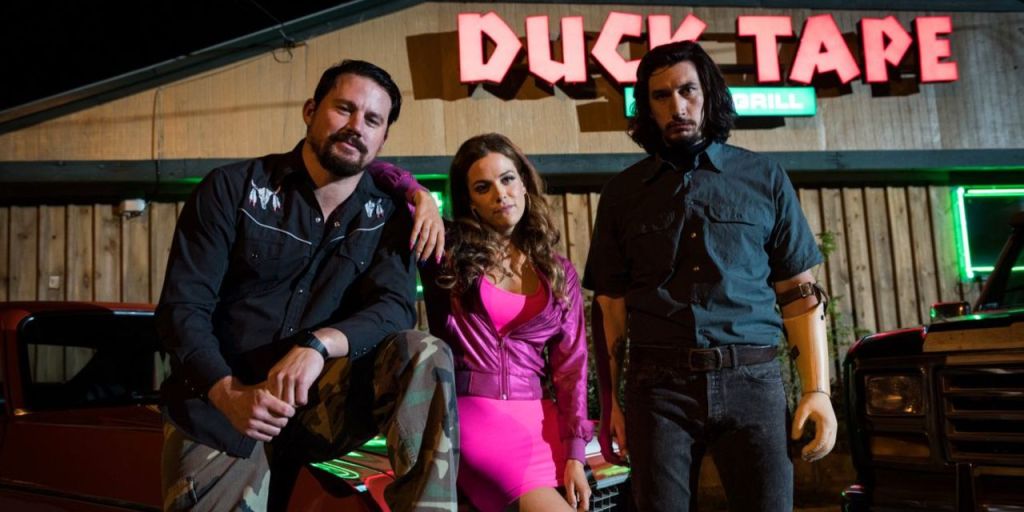
Steven Soderbergh’s Logan Lucky was his first major project post-retirement, marking a return to his heist film roots after his previous successes with Ocean’s Eleven and its sequels. The film, written by Rebecca Blunt, stars Channing Tatum and Adam Driver as the Logan brothers, who plan a heist during a NASCAR race in North Carolina. This comedy-drama introduces Soderbergh’s move towards a more working-class perspective, straying from the glamorous, high-stakes heists of his past work.
Logan Lucky stands out due to its rich character development and storytelling technique. Its blue-collar charm and authentic portrayal of the American South create a vibrant world that’s enticing and relatable. Soderbergh leverages the heist genre to infuse humour and excitement, resulting in an entertaining film that appeals to a wide audience. The clever script, combined with strong performances from the cast, adds a layer of complexity and humanity to the story.
However, Logan Lucky does have some flaws. The pacing could be more efficient, as it tends to drag in parts, and there are moments where it overindulges in its quirky humour. The plot, though interesting, relies heavily on the audience’s suspension of disbelief. It often feels like the film’s aim to be a “hillbilly heist” flick limits its scope and prevents it from reaching the narrative depth that could have been achieved.
Unsane | 2018 | Psychological Thriller

Soderbergh’s Unsane showcases his exploration into new filming techniques, as this psychological thriller was shot entirely on an iPhone. It stars Claire Foy as Sawyer Valentini, a woman who’s involuntarily committed to a mental institution where she believes her stalker is working.
Soderbergh’s use of an iPhone for filming provides a certain rawness and intensity to the film, complementing the theme of paranoia and mental instability. Claire Foy delivers a powerful performance, lending credibility to her character’s predicament. Unsane effectively builds tension and suspense, leaving viewers on the edge of their seats.
Despite its merits, Unsane does fall short in some areas. The narrative can sometimes feel forced, with certain plot twists seeming more gimmicky than authentic. Additionally, the film’s depiction of mental health issues might be considered simplistic or even exploitative, failing to explore the nuances of its subject matter adequately.
High Flying Bird | 2019 | Sports, Drama
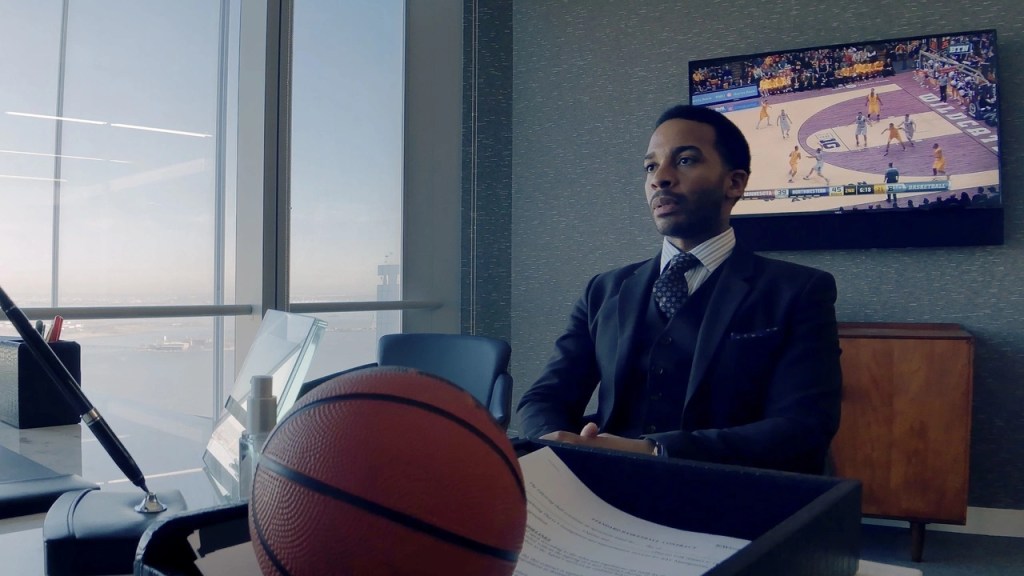
High Flying Bird, another Soderbergh film shot on an iPhone, is a sports drama that delves into the world of professional basketball. Starring André Holland, the film presents a sports agent who proposes a controversial business opportunity during a pro basketball lockout. The film reflects Soderbergh’s ongoing interest in the intersection of sports, business, and politics.
The film excels in its intelligent and sharp dialogue, largely thanks to Tarell Alvin McCraney’s script. Its exploration of racial and economic politics within professional sports offers a fresh perspective on a familiar subject. High Flying Bird also effectively utilises its iPhone cinematography to give an intimate look at its characters and settings.
Despite these strengths, High Flying Bird struggles with its pacing and overall narrative structure. Some subplots and character arcs are not fully developed, and the film sometimes gets lost in its own dialogue-heavy scenes. While the performances are generally strong, they are occasionally undermined by the film’s disjointed storyline.
The Laundromat | 2019 | Hyperlink Cinema, Crime, Drama

The Laundromat is a biographical comedy-drama written by Scott Z. Burns. Based on the Panama Papers scandal, it features a star-studded cast including Meryl Streep, Gary Oldman, and Antonio Banderas. Soderbergh appears to tackle this film as a critique of the global financial system and the elite’s abuse of it.
The Laundromat offers a promising premise with its subject matter and has moments of clever dialogue. It attempts to break down complex economic concepts in an accessible and entertaining way. The film boasts of a strong performance by Meryl Streep, as she embodies a common woman caught in a system designed to protect the wealthy.
However, The Laundromat fails to deliver on its potential fully. It suffers from an uneven narrative, and the episodic structure does not create a cohesive viewing experience. It seems to struggle with its tone, juggling between a comedic satire and a hard-hitting exposé. The attempt to cover too many subplots leads to an unfocused narrative that dilutes the overall message of the film.
Let Them All Talk | 2020 | Comedy-Drama

Let Them All Talk is a comedy-drama starring Meryl Streep, Dianne Wiest, and Candice Bergen. It tells the story of a famous author who takes a trip with her old friends and nephew to find fun and come to terms with her past. The film explores the complexities of friendships and personal growth, seemingly fitting into Soderbergh’s pattern of post-retirement character-driven narratives.
Let Them All Talk shines in its performances, especially from its lead actresses. It provides an often-amusing examination of life’s regrets, achievements, and unfulfilled ambitions. The improvised dialogue lends a sense of realism to the interactions and conversations between characters.
However, the improvisational style also works against the film. The narrative can feel aimless and lacks the necessary tension to keep viewers engaged. Although the film attempts to explore deeper themes, the lack of a strong script results in a vague and often unsatisfying exploration of its characters and their relationships.
No Sudden Move | 2021 | Heist Film, Period Drama
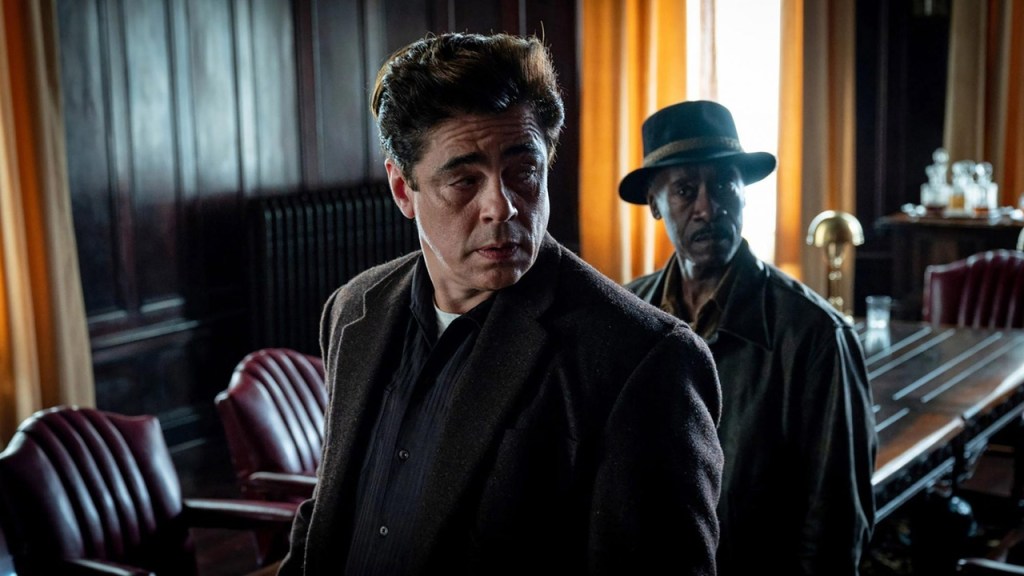
No Sudden Move, a crime thriller set in 1950s Detroit, continues Soderbergh’s foray into diverse genres post-retirement. Starring Don Cheadle, Benicio del Toro, and David Harbour, the film follows a group of small-time criminals who are hired to steal a document, only to find themselves embroiled in a web of double-crosses. The film showcases Soderbergh’s fondness for ensemble casts and complex narratives, furthering his exploration into the underworld of crime.
The film scores points for its gritty portrayal of the time period, as well as its engaging performances. The characters are well-developed and intriguing, drawing viewers into the convoluted plot. The cleverly written dialogue is another plus, adding depth to the characters and their interactions. No Sudden Move presents a twisting narrative that keeps the audience guessing, and Soderbergh’s direction effectively builds suspense.
However, the film falters in its execution. The story often feels unnecessarily complex, and the numerous plot twists can be confusing. The pacing is uneven, with the narrative dragging in parts. Furthermore, despite the strong performances, some characters seem underdeveloped and their motivations unclear, leaving the audience unsatisfied.
Kimi | 2022 | Thriller

Kimi is Steven Soderbergh’s exploration into the intersection of technology and society in the post-pandemic world. Starring Zoe Kravitz, the film revolves around an agoraphobic tech worker who stumbles upon a potentially violent crime while reviewing data for a home AI assistant, the titular ‘Kimi.’ The film embodies Soderbergh’s continued experimentation with topical narratives and non-traditional filming techniques, with the COVID-19 pandemic and its impact on societal structures being a significant influence.
Kimi skillfully crafts a sense of tension and suspense, aided by a strong performance from Zoe Kravitz. The narrative is firmly grounded in the digital age, exploring the implications of technology in our everyday lives, which makes it relevant and thought-provoking. The film also showcases Soderbergh’s adeptness in utilising limited settings to build tension – a skill he honed in Unsane. Kimi is engaging, thanks to the interesting premise and Soderbergh’s knack for taut storytelling.
However, Kimi suffers from certain shortcomings that prevent it from being a great film. While the premise is intriguing, the execution can feel lacking in depth. The narrative is occasionally slow and fails to capitalise on its tension-filled premise. Character development is another area where the film falls short. Beyond Kravitz’s character, other characters feel flat and underdeveloped. Finally, the film’s commentary on technology, while relevant, can sometimes feel too on the nose, reducing the complexity of its potential critique.
Conclusion
Steven Soderbergh’s post-retirement filmography paints a picture of an auteur constantly in search of the next boundary to push, the next narrative to explore. His works since 2013, from the comedic heist film Logan Lucky to the psychological thriller Unsane, the sports drama High Flying Bird, and the crime-filled No Sudden Move, illustrate his relentless desire to reinvent his storytelling, embrace new technologies, and take risks with various narrative structures and genres.
Even when some of his films, like The Laundromat and Let Them All Talk, did not meet their full potential, they still showcased Soderbergh’s boldness in tackling complex topics and innovative filmmaking techniques. Kimi, his latest work underscores his ongoing fascination with the implications of technology on society, although it, too, demonstrates areas where there could be more depth and nuance.
In each of these films, we see a different facet of Soderbergh’s creativity, his willingness to break conventions, and his adeptness in weaving narratives that are as intriguing as they are diverse. Regardless of individual film successes or missteps, there’s no denying the impact and influence of Soderbergh’s continued contribution to the world of cinema. It’s this restless, fearless approach to filmmaking that truly sets Soderbergh apart and solidifies his enduring legacy in the film industry. You can only hope Tarantino’s retirement will be as eventual.
 Bronze Screen Dream
One response to “A Guide To Steven Soderbergh’s Post-Retirement Films”
[…] the horror genre again is exciting news for fans of his work and the genre. As demonstrated in his previous films, the director’s ability to create tension and suspense could lend itself well to the horror […]
LikeLike