
George Abbott
Try Abbott | if you like the lively and well-crafted musical films of Jerome Robbins, Stanley Donen, and Bob Fosse.
(1887 – 1995) | Canon Place: 5/10 | 🇺🇸
Career Overview and Notable Films
George Abbott was a titan in American theatre, with a career that spanned over seven decades. His foray into cinema saw him adapt successful Broadway plays, including The Pajama Game and Damn Yankees, which he co-directed with Stanley Donen. These films brought the vibrancy and spirit of Broadway musicals to the silver screen, making them accessible to a wider audience.
Distinctive Features
Abbott’s films are characterised by their theatrical style, a testament to his roots in Broadway. His work often revolves around everyday people, imbued with humour and romance. His visual style is straightforward, focusing more on the performances and the dialogue. The dialogue in his films often features quick, witty exchanges, a hallmark of his theatrical background.
Abbott’s films often feature elaborate musical numbers. These sequences are noted for their choreography and the integration of song into the narrative, providing a seamless transition between dialogue and music.
Influence and Importance
Abbott’s work on The Pajama Game and Damn Yankees helped popularise the genre of musical comedy films in the 1950s. Furthermore, his ability to adapt stage plays for the screen has had a lasting impact on how musicals are filmed, influencing a generation of directors in both theatre and film.
Vadim Abdrashitov
Try Abdrashitov | if you like the thought-provoking and politically charged films of Andrey Tarkovsky, Aleksandr Sokurov, and Elem Klimov.
1945 – 2023 | Canon place: 5/10 | 🇷🇺
Career Overview and Notable Films
Vadim Abdrashitov is a Russian film director known for his collaborations with writer Aleksandr Mindadze. Their films, including Fox Hunting and Plumbum, or The Dangerous Game, are considered significant works in Russian cinema. Abdrashitov’s film Parade of the Planets won the Silver Lion at the 1984 Venice Film Festival.
Distinctive Features
Abdrashitov’s films often explore the human condition and societal issues in the Soviet Union. His visual style is marked by long takes and a slow pace, creating a meditative viewing experience. His narratives are complex, often featuring characters in moral or existential crises.
Abdrashitov’s films are known for their philosophical depth. They often grapple with existential questions set against the backdrop of Soviet society during Perestroika.
Influence and Importance
Abdrashitov’s films are significant contributions to Russian cinema, particularly during the late Soviet era. His works provided insightful perspectives on the societal realities of the time, contributing to the rich tapestry of socially and politically charged films in Russian cinema. His films continue to influence Russian and Eastern European filmmakers with their thought-provoking narratives and distinct storytelling style.
Jim Abrahams

Try Abrahams | If you like the parody films of Mel Brooks, Jerry Zucker, and David Zucker.
1944 – – | Canon place: 7/10 | 🇺🇸
Career Overview and Notable Films
Jim Abrahams is an American film director known for his parody films and distinctive comedic style. Along with the Zucker brothers, he formed a part of the comedy team “ZAZ” (Zucker, Abrahams, Zucker). The team was responsible for comedy classics such as Airplane!, Top Secret!, and The Naked Gun series. He also directed Hot Shots! and its sequel Hot Shots! Part Deux.
Distinctive Features
Abrahams’ films are characterised by their slapstick humour, absurd situations, and parodies of popular film genres. His works often contain rapid-fire jokes, visual gags, and puns, creating a distinctive and highly comedic style. The parody elements in his films go beyond simple imitation, often pushing boundaries to create absurd and hilarious situations.
Influence and Importance
Abrahams’ work in parody and comedy has significantly influenced the movie-going public. His films Airplane! and The Naked Gun series have become enduring classics and are frequently found listed in favourite comedy films lists. His unique style of humour inspires comedians and filmmakers alike, cementing his place in the history of American comedy cinema.
John Abraham
Try Abraham | If you like the innovative and socially conscious films of Satyajit Ray, Shyam Benegal, and Mrinal Sen.
1937 – 1987 | Canon place: 5/10 | 🇮🇳
Career Overview and Notable Films
John Abraham was an Indian filmmaker, screenwriter, and actor known for contributing to the New Wave movement in Kerala, also known as Malayalam Parallel Cinema. He directed a handful of films in his lifetime, most notably Amma Ariyan, the first-ever film funded by the public in Kerala. His other notable works include Agraharathil Kazhuthai and Cheriyachante Kroorakrithyangal.
Distinctive Features
Abraham’s films were renowned for their revolutionary spirit, tackling pressing social and political issues. They often showcased realism, with narratives grounded in the experiences of ordinary people. Abraham was also known for his unconventional filmmaking methods, including community-funded productions and collective filmmaking.
Influence and Importance
John Abraham was a crucial figure in Indian Parallel Cinema, particularly in Kerala. He was a prominent advocate for a cinema independent of commercial interests. His legacy lives on in Kerala’s independent and experimental filmmaking scene, influencing many regional contemporary filmmakers.
Lenny Abrahamson

Try Abrahamson | If you like the intimate, character-driven films of Kenneth Lonergan, Sean Baker, and Andrea Arnold.
1966 – – |Canon place: 7/10 | 🇮🇪
Career Overview and Notable Films
Lenny Abrahamson is an Irish film and television director who has gained international recognition for his distinctive storytelling style. He first gained attention with Adam & Paul, a tragicomedy about drug addiction. His later works like Frank and Room have cemented his reputation as a filmmaker of international acclaim, with Room earning him an Academy Award nomination for Best Director.
Distinctive Features
Abrahamson’s films are known for their psychological depth, nuanced character portrayals, and immersive storytelling. His films often tackle complex themes such as identity, isolation, and the human condition. His distinct approach to storytelling, often employing restraint and subtlety, allows his characters and their emotional journeys to take centre stage.
Influence and Importance
Abrahamson is one of the most notable figures in contemporary Irish cinema. His international acclaim has brought attention to Irish filmmaking, contributing to its rise on the global stage. His films, especially Room, have left a significant mark on international cinema, resonating with audiences and critics alike for their emotional depth and profound themes.
J. J. Abrams
Try Abrams | if you like the sci-fi and action-packed films of Steven Spielberg, Michael Bay, and Joss Whedon.
1966 – – | Canon place: 7/10 | 🇺🇸
Career Overview and Notable Films
J. J. Abrams is one of the most influential figures in contemporary Hollywood, with a filmography that includes some of the biggest blockbusters of the 21st century. His directorial work includes films in the Star Trek franchise, the Star Wars sequel trilogy, and his original production, Super 8.
Distinctive Features
Abrams’ films are characterised by their high-energy action sequences, intricate plotlines, and frequent use of mystery elements. He is known for his ‘mystery box’ storytelling approach, where he introduces a question or a mystery early in the narrative that propels the story forward.
Influence and Importance
Abrams’ contributions to the revival and continuation of significant franchises like Star Trek and Star Wars have earned him a significant place in modern cinema. His approach to storytelling, often featuring intricate plots and innovative special effects, has influenced numerous filmmakers in the realm of science fiction and action cinema.
Hany Abu-Assad

Try Abu-Assad | if you like the politically-charged and humanistic films of Elia Suleiman, Rashid Masharawi, and Jafar Panahi.
1961 – – | Canon place: 6/10 | 🇵🇸
Career Overview and Notable Films
Hany Abu-Assad is a Palestinian film director who has received critical acclaim for his insightful depictions of life under occupation. His films Paradise Now and Omar both received nominations for the Academy Award for Best Foreign Language Film. The former is a provocative exploration of the mindset of suicide bombers, while the latter is a romantic thriller set against the backdrop of the Israeli occupation.
Distinctive Features
Abu-Assad’s films often deal with the political conflict in Palestine, focusing on the individual stories and emotional struggles of ordinary people living under occupation. His films blend elements of drama, romance, and thriller genres, making them not just political commentaries but also engaging narratives with universal human themes.
Influence and Importance
Abu-Assad is a significant voice in Palestinian cinema. His international acclaim has brought global attention to the issues faced by Palestinians. Through his evocative storytelling, he has humanised the political struggle, contributing to a broader understanding and empathy for the Palestinian cause.
Tengiz Abuladze
Try Abuladze | if you like the allegorical and socially-critical films of Sergei Parajanov, Andrei Tarkovsky, and Mikhail Kalatozov.
1924 – 1994 | Canon place: 7/10 | 🇬🇪
Career Overview and Notable Films
Tengiz Abuladze was a Georgian film director and screenwriter known for his Repentance, an allegorical critique of Stalinism. The film was initially banned in the Soviet Union but was later released and received international recognition, winning the Special Jury Prize at the 1987 Cannes Film Festival.
Distinctive Features
Abuladze’s films are known for their allegorical storytelling, poetic imagery, and socio-political commentary. His narratives often combine elements of fantasy and reality to convey his critical perspectives on the political and social realities of his time.
Influence and Importance
Abuladze played a crucial role in Georgian cinema during the Soviet era. His film Repentance is a landmark film in Soviet cinema due to its daring critique of Stalinism, and it continues to be regarded as a classic in Eastern European cinema.
Herbert Achternbusch

Try Achternbusch | if you like the absurd and unconventional films of Werner Herzog, Rainer Werner Fassbinder, and Hans-Jürgen Syberberg.
1938 – 2022 | Canon place: 4/10 | 🇩🇪
Career Overview and Notable Films
Herbert Achternbusch is a German film director, author, painter, and actor known for his eccentric and often controversial works. His films, such as The Last Hole and Servus Bayern, reflect his unique narrative style and confrontational themes.
Distinctive Features
Achternbusch’s films are characterised by their absurdist sense of humour, experimental narrative structures, and provocative themes. He often blends elements of fantasy and reality to create dreamlike narratives that critique German society and culture.
Influence and Importance
Achternbusch is an important figure in New German Cinema, a movement that sought to create a distinctively German cinematic voice in the post-World War II era. His films, while controversial, have contributed to the diversity and richness of German cinema.
Karpo Acimovic-Godina
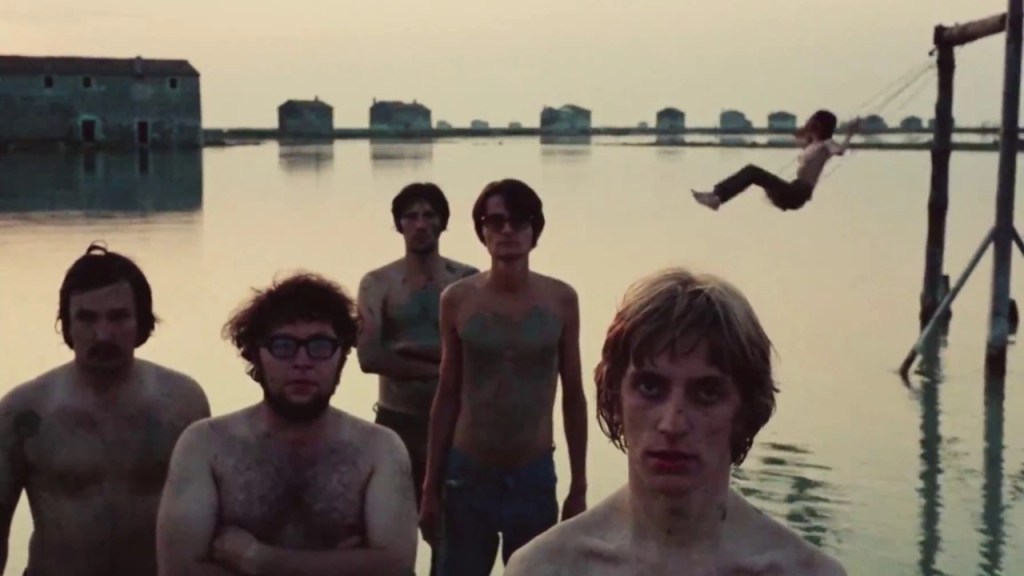
Try Acimovic-Godina | if you like the experimental and satirical films of Dušan Makavejev, Emir Kusturica, and Aleksandar Petrović.
1943 – – | Canon place: 5/10 | 🇸🇮
Career Overview and Notable Films
Karpo Acimovic-Godina is a Slovenian film director known for contributing to the Yugoslav Black Wave movement. He is best known for The Medusa Raft, a highly stylised and experimental film that combines documentary and fictional elements.
Distinctive Features
Acimovic-Godina’s films are characterised by their stylistic innovation, a blending of film genres, and socio-political critique. He often uses satirical and surrealist elements to comment on the social and political realities of his time.
Influence and Importance
Acimovic-Godina played a significant role in the Yugoslav Black Wave movement, which sought to critique and challenge the socialist regime in Yugoslavia through cinema. His innovative style and political engagement have left a lasting impact on Slovenian and Eastern European cinema.
 Bronze Screen Dream