
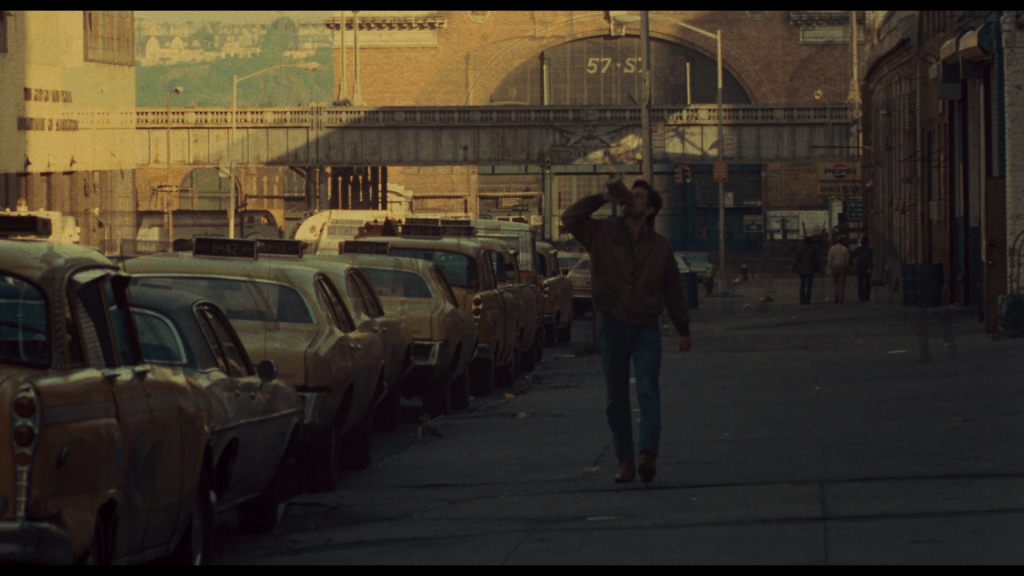
When it premiered in 1976, Martin Scorsese‘s Taxi Driver collided with cinema; movies were never the same. Starring Robert De Niro as the insomniac taxi driver Travis Bickle, the film became an instant classic, revered for its gritty portrayal of urban decay, its complex character study of a disturbed anti-hero, and its unflinching exploration of violence and moral ambiguity. Today, it continues to be celebrated as one of the greatest films ever made.
Taxi Driver is lauded for its immersive storytelling, innovative cinematography, and De Niro’s haunting performance. Scorsese’s masterful depiction of Bickle’s descent into madness against the backdrop of a crime-ridden New York City has resonated deeply with audiences, making Taxi Driver a touchstone of American cinema.
Its influence can be seen in a multitude of films, with many directors drawing inspiration from Scorsese’s exploration of alienation, vigilantism, and the darker side of urban life. While Taxi Driver‘s shadow looms large, these films have managed to carve out their unique identities, often reinterpreting and expanding on the themes and stylistic elements in Scorsese’s masterpiece.
This article delves into ten modern films from the last 15 years that intriguingly echo Taxi Driver. These films—ranging from psychological thrillers to crime dramas, from stark character studies to sprawling multi-generational tales—pay homage to Taxi Driver while pushing the boundaries of their respective genres. They prove that even after nearly half a century, the influence of Taxi Driver is still keenly felt in contemporary cinema. So, buckle up, and let’s embark on this cinematic journey through the modern echoes of Taxi Driver.
1. You Were Never Really Here (2017)

You Were Never Really Here is a psychological thriller written and directed by Lynne Ramsay. It tells the story of Joe, a troubled and brutal enforcer, who is hired to rescue a politician’s daughter from a human trafficking ring. However, things quickly spiral out of control, leading Joe into a world of corruption and violence that threatens to consume him.
Like Taxi Driver, You Were Never Really Here also portrays a violent protagonist navigating the grim underbelly of a city. Both films share a similar thematic exploration of urban decay and moral degradation. Like Travis Bickle in Taxi Driver, Joe is a deeply disturbed individual who becomes a vigilante in an attempt to impose some sort of order or justice in a world that he perceives to be steeped in corruption.
However, You Were Never Really Here is arguably even more brutal and less compromising than Taxi Driver. The film dives deep into Joe’s traumatic past and presents his violence in an unsettlingly detached manner.
2. Drive (2011)

Drive is a neo-noir crime thriller directed by Nicolas Winding Refn. The film follows an enigmatic Hollywood stunt driver who moonlights as a getaway driver. When he becomes involved with his neighbour and her young son, he finds himself drawn into a dangerous world of mobsters and heists that threatens his peaceful existence.
Drive shares the urban setting and the theme of a lone protagonist against a corrupt world with Taxi Driver. The Driver, much like Travis Bickle, is a quiet individual who becomes increasingly violent as the movie progresses, with both characters acting as anti-heroes in their respective narratives.
However, Drive differs from Taxi Driver in its stylistic choices. It features a highly stylised aesthetic with neon colours and an electronic soundtrack, contrasting with Taxi Driver‘s gritty realism. Its narrative also leans more towards crime and action rather than the psychological exploration in Taxi Driver. But these differences notwithstanding, fans of Taxi Driver would likely find Drive‘s compelling blend of violence and moral ambiguity engaging.
3. Nightcrawler (2014)

Nightcrawler is a thriller written and directed by Dan Gilroy. It centres on Lou Bloom, an ambitious man who enters the dangerous world of freelance crime journalism in Los Angeles. He starts to blur the line between observer and participant to become the star of his own story, stopping at nothing to get the perfect shot.
Just like Taxi Driver, Nightcrawler provides a disturbing portrait of a sociopath navigating the grimy underbelly of a city. Both films share a critical view of urban life, with Nightcrawler focusing on the ethically compromised world of crime journalism, similar to how Taxi Driver comments on the moral decay of New York City in the 70s.
However, Nightcrawler is less about the protagonist’s descent into madness and more about his ruthless ambition. It presents a darker version of the American Dream, showing the lengths someone will go to achieve success. Fans of Taxi Driver would likely appreciate the similar themes and gritty cityscapes found in Nightcrawler.
4. Good Time (2017)

Good Time is a crime thriller directed by the Safdie brothers. The story revolves around Constantine “Connie” Nikas, who embarks on a desperate journey through New York City’s underworld in a frantic attempt to get his brother out of jail after a bank robbery goes awry.
Like Taxi Driver, Good Time showcases the seedy underbelly of New York City. Both films are infused with a sense of urgency and desperation, with their protagonists driven by a misguided sense of duty. The chaotic, neon-lit nighttime scenes in Good Time echo the gritty, disorienting atmosphere of Taxi Driver.
However, Good Time leans more towards the heist genre and places a stronger emphasis on the bond between brothers, diverging from the focus on individual isolation in Taxi Driver. Nevertheless, fans of Taxi Driver should find Good Time‘s exploration of desperation and moral ambiguity thoroughly engrossing.
5. First Reformed (2017)

First Reformed is a drama directed by Paul Schrader, who also penned Taxi Driver. The film follows Reverend Ernst Toller, a solitary pastor at a small Dutch Reform church in upstate New York, who grapples with mounting despair brought on by personal loss, a dwindling congregation, and a troubled parishioner’s radical environmentalism.
Like Taxi Driver, First Reformed grapples with themes of isolation, despair, and a protagonist’s struggle against his inner demons. Like Travis Bickle, Reverend Toller is a man on the edge, battling his beliefs and the world around him.
However, the setting and context are drastically different. First Reformed is set in a quiet, rural church, contrasting sharply with the bustling urban setting of Taxi Driver. The film also deals more explicitly with themes of faith and environmentalism. Despite these differences, First Reformed should resonate with fans of Taxi Driver due to its shared writer and similar exploration of a tortured soul in crisis.
6. The Place Beyond The Pines (2012)

The Place Beyond The Pines is a crime drama directed by Derek Cianfrance. The film is a multi-generational narrative that begins with Luke, a motorcycle stunt rider who turns to robbing banks to provide for his lover and their newborn child. This decision leads to a collision course with an ambitious rookie cop navigating a department ruled by a corrupt detective.
This film shares with Taxi Driver the theme of a man resorting to violence in an attempt to do what he believes is right in a morally ambiguous world. Like Travis Bickle, Luke is a deeply flawed character who ultimately becomes a tragic figure due to his misguided actions.
However, The Place Beyond The Pines diverges from Taxi Driver in its structure. It tells a sprawling, multi-generational story, as opposed to the tightly focused narrative of Taxi Driver. It also explores themes of fatherhood and legacy that are absent in Taxi Driver. Despite these differences, fans of Taxi Driver might appreciate the nuanced character study and moral complexity offered by The Place Beyond The Pines.
7. Joker (2019)

Joker is a psychological thriller directed by Todd Phillips. The film is an origin story for the infamous DC Comics villain, Joker. Set in Gotham City in the 1980s, it follows Arthur Fleck, a failed stand-up comedian who descends into madness and becomes a psychopathic murderer, sparking a city-wide uprising against the wealthy.
There are clear parallels between Joker and Taxi Driver. Both films follow mentally unstable loners who are pushed to the edge by the cruelty and indifference of their societies. Arthur Fleck’s transformation into the Joker mirrors Travis Bickle’s spiral into violent vigilantism. The film shares similarities with other Scorsese films like The King of Comedy.
However, Joker is rooted in the world of comic book mythology, with its narrative leading to the rise of one of pop culture’s most iconic villains. This superhero context significantly departs from Taxi Driver‘s grounded, real-world setting.
8. Blue Ruin (2013)
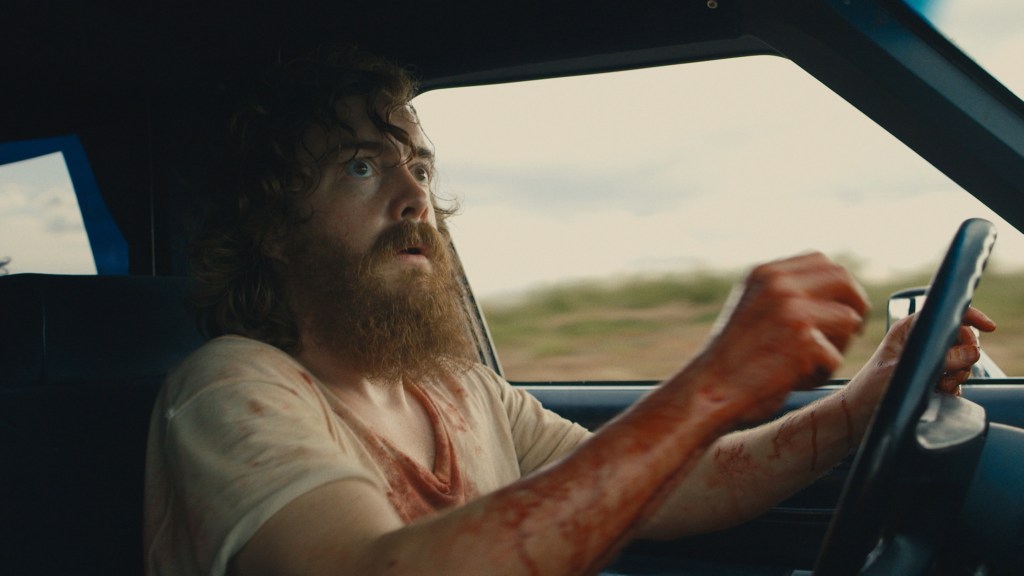
Blue Ruin is a revenge thriller directed by Jeremy Saulnier. The film follows Dwight, a vagrant living out of his car, who learns that the man convicted of killing his parents is being released from prison. This sets Dwight on a path of revenge, despite his lack of skills or planning, leading to a bloody and brutal downward spiral.
Like Taxi Driver, Blue Ruin explores the theme of an ordinary man being driven to violence due to personal trauma. Both films feature protagonists who, despite their lack of traditional heroism, take matters into their own hands in attempts to right perceived wrongs.
However, Blue Ruin lacks the urban setting and the character’s mental health exploration that defines Taxi Driver. Nonetheless, fans of Taxi Driver might enjoy the intense, suspenseful narrative and the exploration of revenge in Blue Ruin.
9. Bullhead (2011)
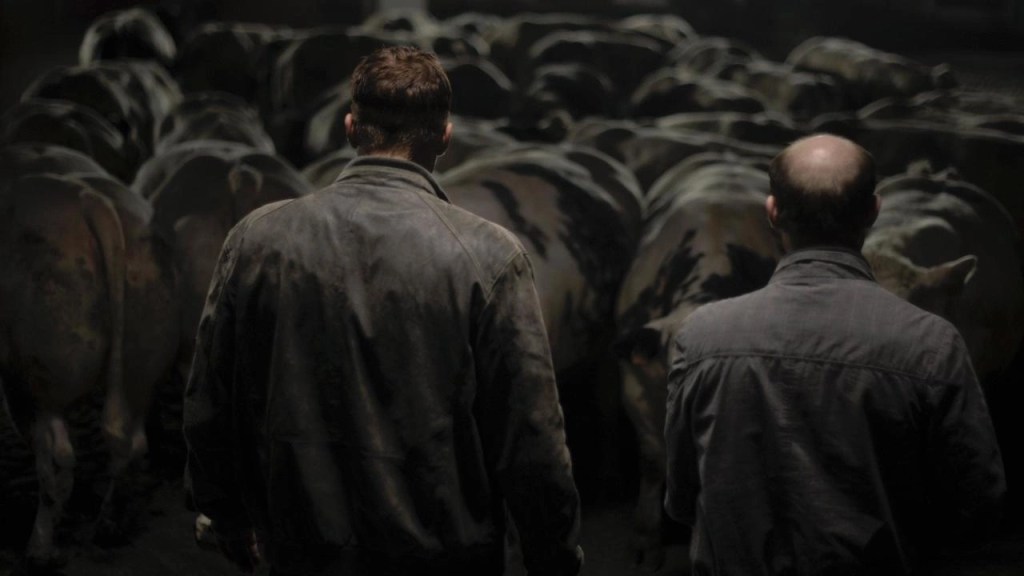
Bullhead is a Belgian crime film directed by Michaël R. Roskam. The film tells the story of Jacky Vanmarsenille, a cattle farmer who becomes entangled in the underworld of the Belgian hormone mafia. Jacky’s past trauma and heavy steroid use push him into a downward spiral of violence and paranoia.
Like Travis Bickle in Taxi Driver, Jacky is a character marked by past traumas that shape his present life in destructive ways. Both films explore the effects of violence on an individual’s psyche and the ramifications of trying to impose personal justice in a corrupt world.
However, Bullhead is set in the rural landscape of Belgium’s cattle industry, a far cry from the bustling streets of New York City in Taxi Driver. The film also delves into the specific cultural context of the Belgian hormone mafia, which is distinct from Taxi Driver‘s universal urban themes. Despite these differences, fans of Taxi Driver may appreciate Bullhead‘s compelling character study and its exploration of violence and masculinity.
10. Prisoners (2013)
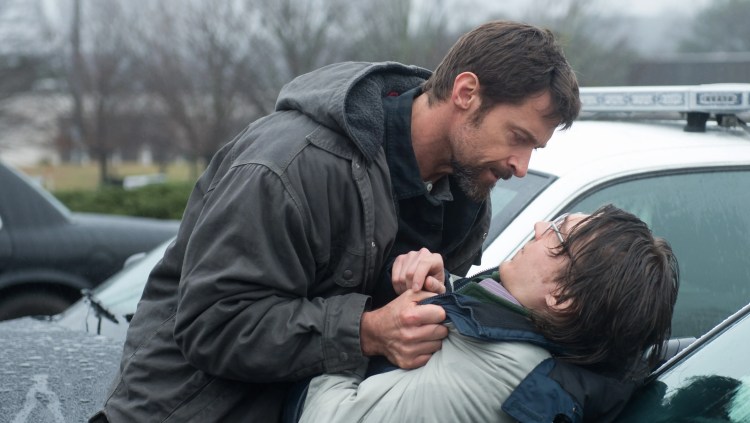
Prisoners is a thriller directed by Denis Villeneuve which revolves around the disappearance of two young girls in Pennsylvania and the subsequent hunt to find them. When the police fail to find the girls, one of the fathers, Keller Dover, takes matters into his own hands, leading him down a dangerous and morally ambiguous path.
Like Taxi Driver, Prisoners delves into a man’s psyche driven to extreme measures by a sense of duty and desperation. Both Keller Dover and Travis Bickle are characters who resort to vigilante justice in the face of perceived institutional failure, leading them into a vortex of violence and moral ambiguity.
However, Prisoners diverges from Taxi Driver in its focus on the familial aspect. The driving force for Dover’s actions is his paternal instinct to protect his family, in contrast to Bickle’s individualistic motivations. Additionally, Prisoners is more of a suspenseful detective story than the psychological character study of Taxi Driver. Nevertheless, fans of Taxi Driver should find Prisoners‘ exploration of moral boundaries and the lengths one will go to for justice compelling.
 Bronze Screen Dream