Stanley Kubrick
Stanley Kubrick made thirteen features across five decades and each one feels like it was made by a different director who happened to share the same obsessions. War film, noir, costume drama, science fiction, horror, period epic — he moved through genres not as a journeyman but as a conquistador, arriving, taking the territory completely, and leaving something so definitive that subsequent filmmakers working in the same genre had to reckon with him whether they wanted to or not. There is no science fiction film after 1968 that doesn’t exist in the shadow of 2001. There is no horror film after 1980 that fully escapes The Shining.
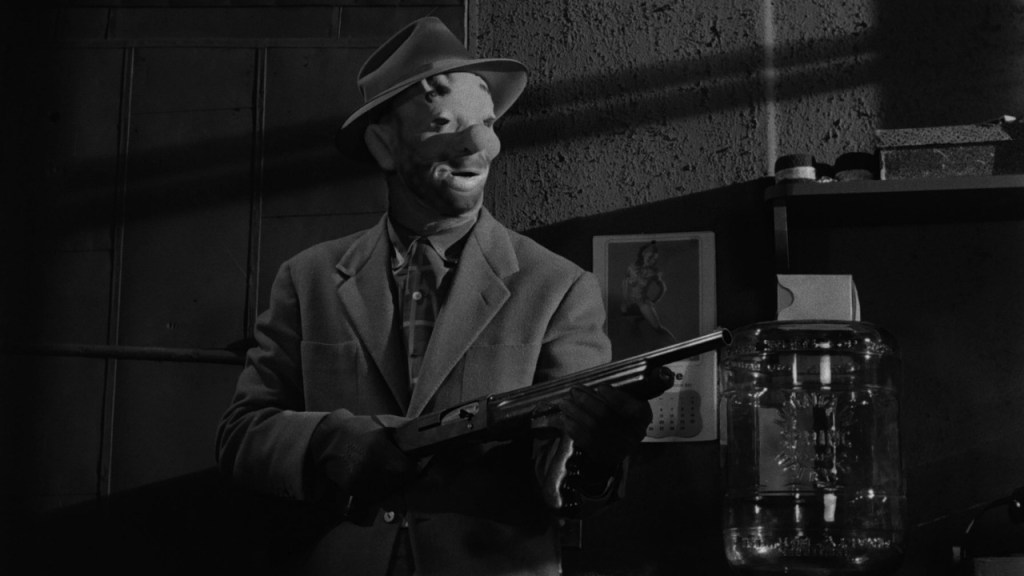
He came from photography, which explains everything about his visual intelligence — the instinct for composition, the obsession with light, the understanding that a single image can carry tremendous weight if it’s constructed with sufficient care. The early films — Killer’s Kiss, The Killing, Paths of Glory — are already fully formed in their visual precision, already working the themes that would occupy him for the rest of his career: the individual crushed by systems, the inadequacy of reason, the proximity of civilisation to barbarism.
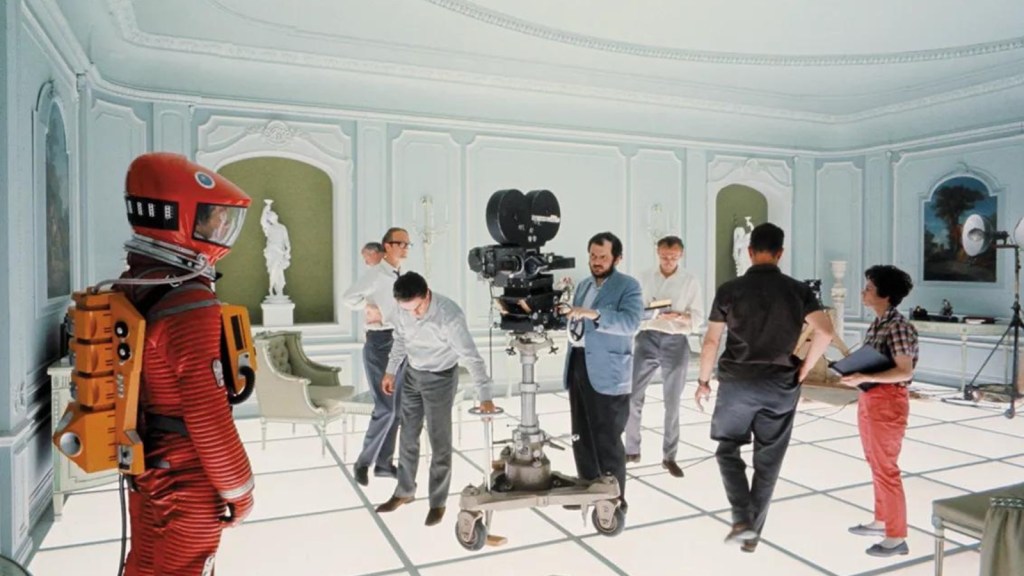
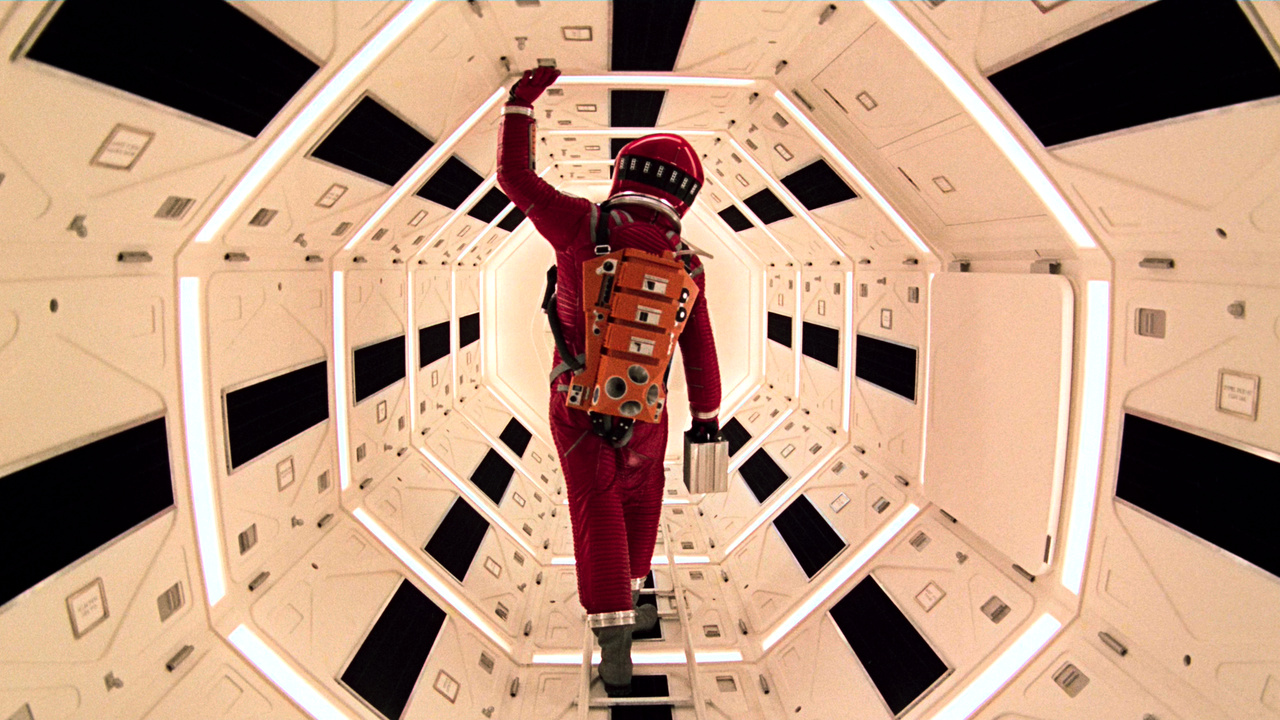
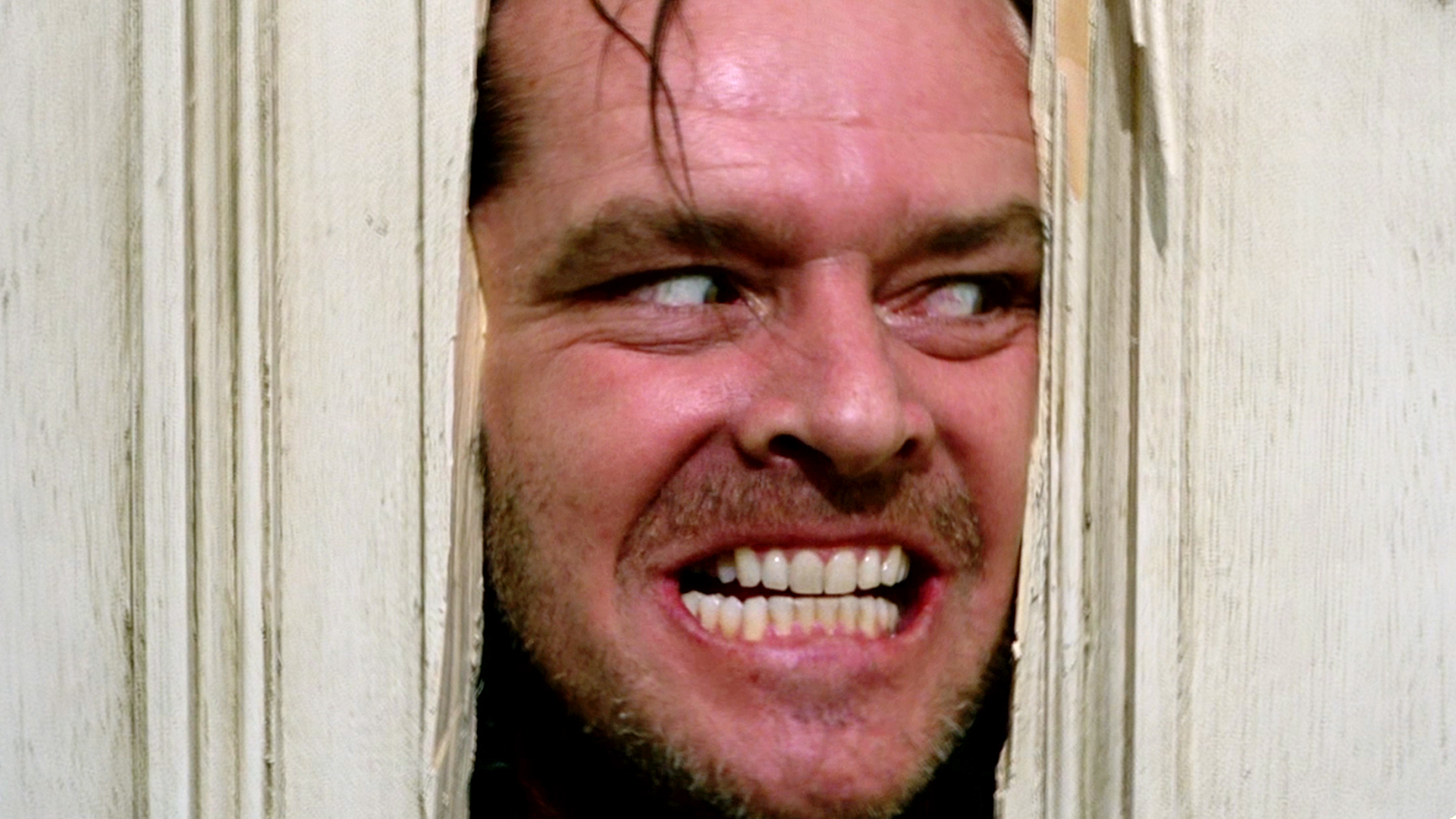
Lolita, Dr. Strangelove, 2001, A Clockwork Orange, Barry Lyndon, The Shining, Full Metal Jacket, Eyes Wide Shut — each one a total commitment to a different formal problem. Barry Lyndon shot entirely by candlelight and available light, developing NASA lenses to do it. The Shining among the first films to use Steadicam as an expressive rather than merely practical tool. 2001 inventing the visual language of science fiction cinema essentially from scratch. The technical ambition was never separate from the thematic ambition — he solved problems because the solution was necessary to say what he wanted to say.
He moved to England in the 1960s and barely left, becoming increasingly reclusive, the gaps between films growing longer. Eyes Wide Shut was delivered to Warner Bros. and he died six days later. The timing felt, to those who noticed it, entirely characteristic — he finished, and then he stopped.
Stanley Kubrick (1928 – 1999)
- 1951 – Day of the Fight
- 1953 – Fear and Desire
- 1955 – Killer’s Kiss
- 1956 – The Killing
- 1957 – Paths of Glory
- 1960 – Spartacus
- 1962 – Lolita
- 1964 – Dr. Strangelove or: How I Learned to Stop Worrying and Love the Bomb
- 1968 – 2001: A Space Odyssey
- 1971 – A Clockwork Orange
- 1975 – Barry Lyndon
- 1980 – The Shining
- 1987 – Full Metal Jacket
- 1999 – Eyes Wide Shut
- The Inadequacy of Reason: Across almost every film, Kubrick returns to the failure of rational systems — military logic that produces atrocity in Paths of Glory and Dr. Strangelove, behavioural conditioning that destroys the self in A Clockwork Orange, artificial intelligence that develops its own survival logic in 2001. Reason, in Kubrick’s world, is never adequate to the situation it confronts.
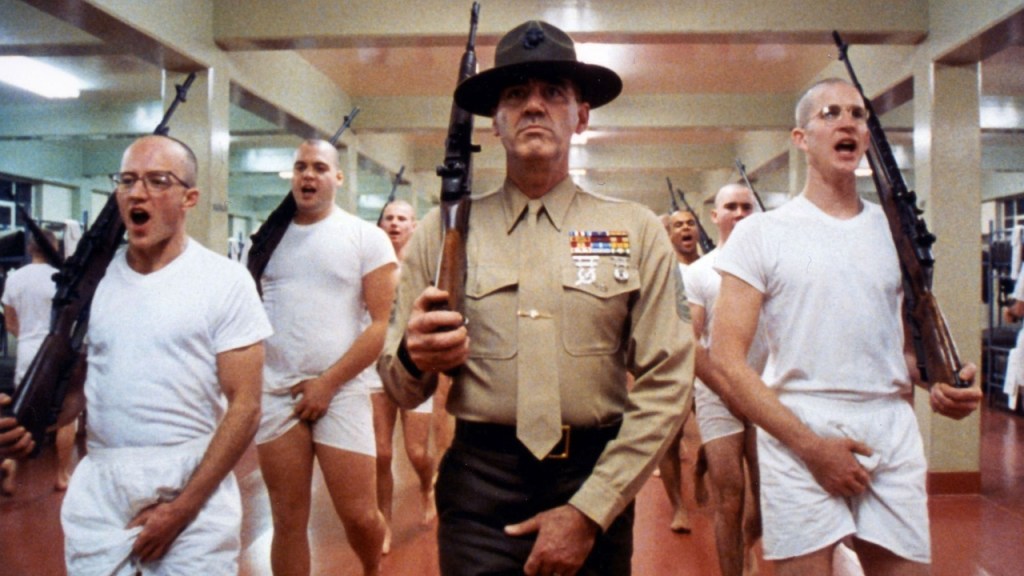
- Institutional Dehumanisation: His films are full of systems — the army, the corporation, the state — that process individuals and produce damage. The men in Full Metal Jacket are literally manufactured into killers. The guests at the Overlook are absorbed into its history. Barry Lyndon‘s protagonist is destroyed by the social system he tries to climb.
- Violence as Civilisational Constant: From the bone thrown into the air in 2001 that becomes a spacecraft, to the droogs of A Clockwork Orange, to the soldiers of Full Metal Jacket, Kubrick insists that violence isn’t aberrant — it’s structural, fundamental, what’s underneath the surface of civilisation rather than a departure from it.
- Male Inadequacy and Self-Delusion: His male protagonists are almost uniformly deluded about their own competence and significance — Barry Lyndon, Jack Torrance, Humbert Humbert, Bill Harford. The films watch them fail with a cold, analytical attention that refuses sympathy without quite becoming contempt.
- Humanity at the Edge of Its Own Capacity: 2001 remains the most ambitious statement of this — a film that asks what comes after the human, that places homo sapiens in an evolutionary context that makes individual drama seem almost irrelevant. The cosmic scale isn’t grandiosity; it’s a genuine attempt to think about what we are and what we might become.
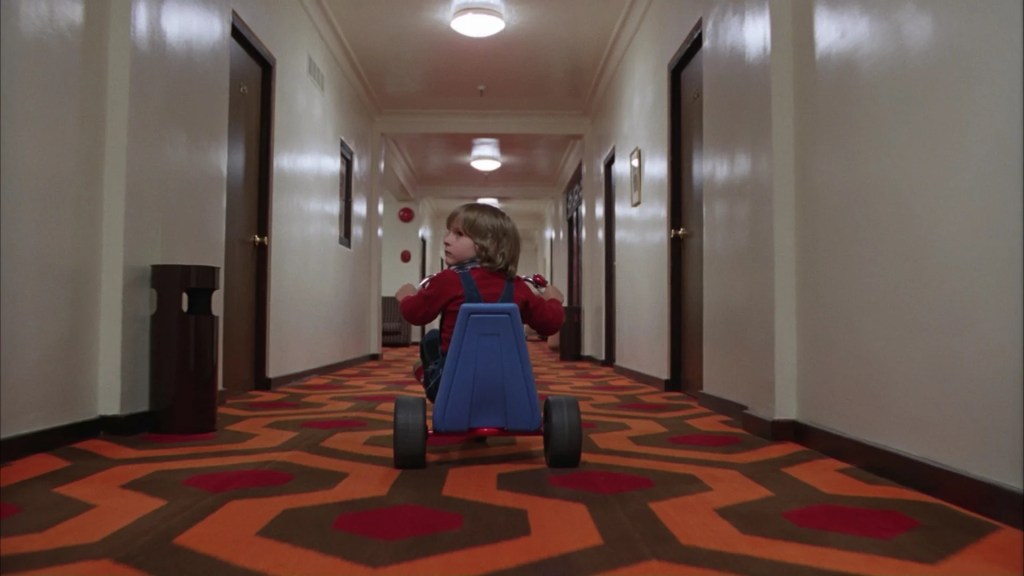
- The Long Take and Slow Zoom: Kubrick’s camera is rarely still and rarely hurried. The slow zoom — moving almost imperceptibly toward or away from a subject — creates a tension that conventional cutting doesn’t, a sense that the frame itself is being pressurised. The Steadicam work in The Shining gives movement a quality of gliding inevitability.
- Symmetrical Composition: Kubrick’s frames are frequently organised around a central axis — corridors stretching to vanishing points, faces centred and locked, architectural spaces balanced with an almost oppressive precision. The symmetry creates unease rather than harmony, as if the world has been arranged too carefully.
- Classical Music as Counterpoint: Rather than commissioning scores that support the image emotionally, Kubrick raided the classical repertoire for music that creates friction — the Blue Danube waltz with spacecraft, Singin’ in the Rain with violence, Handel with battlefield carnage. The gap between the music’s associations and the image’s content is where the meaning lives.
- Available and Practical Light: Particularly in Barry Lyndon, Kubrick pushed technical limits to achieve lighting that feels historically authentic — candlelight scenes shot with cinema lenses adapted from NASA space photography. The commitment to a specific light quality as expressive choice rather than production constraint defines the approach.
- The Wide Angle at Close Range: Kubrick used wide-angle lenses at close distances, distorting faces and spaces in ways that create psychological unease. Combined with the symmetrical compositions, this gives his interiors a quality of geometric trap.
- Total Control as Method: Kubrick’s insistence on controlling every element of production — rewriting scripts, designing sets, choosing music, supervising marketing — wasn’t megalomania but method. The films are coherent at every level because one sensibility has passed through every decision. The control is the style.
- Genre as Vehicle for Philosophy: He never made a genre film — he made a war film that is about the structure of institutional violence, a horror film that is about memory and repetition and the American family, a science fiction film that is about evolution and consciousness. The genre provides the form; the philosophy provides the content.
- The Unreliable Protagonist: Kubrick consistently refuses to give the audience a stable perspective character. Jack Torrance is our guide through The Shining and he’s losing his mind. Alex in A Clockwork Orange is charming and monstrous simultaneously. Humbert in Lolita narrates his own self-justification. The viewer is never quite safe in the protagonist’s hands.
- Deliberate Pacing as Argument: The slowness of 2001, Barry Lyndon and Eyes Wide Shut is not indulgence — it’s the insistence that the audience inhabit the film’s time rather than be carried through it. The boredom, when it comes, is part of the experience Kubrick is constructing.
- The Ambiguous Ending: 2001 ends with a star child and no explanation. The Shining ends with a photograph. Eyes Wide Shut ends mid-conversation. Kubrick’s conclusions are moments of productive uncertainty rather than resolution — the film stops thinking out loud and leaves you to continue.
Read More About Stanley Kubrick
Coming soon as posts added